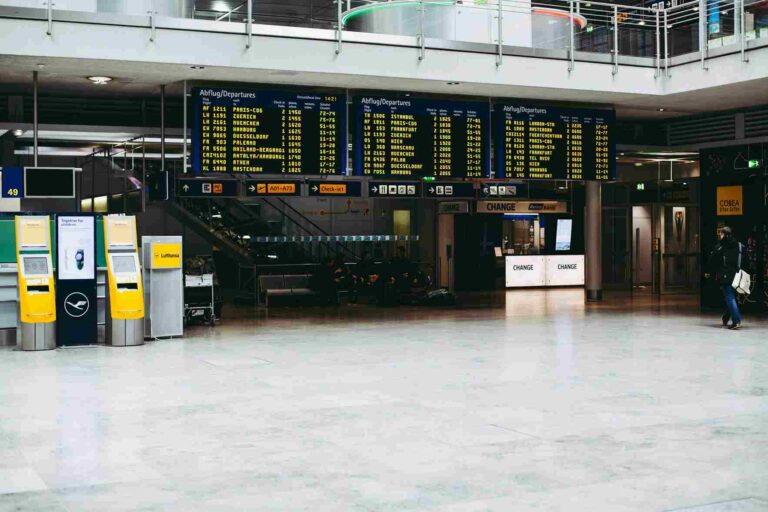
Your flight is at 10am. You figure leaving home at 7am gives you plenty of time. You get to the airport, join the check-in queue, and realise the line stretches around the corner. By the time you get to the counter, it’s 9:15. The agent tells you check-in closed at 9:30 and you’ve just made it, barely. But now they’re asking for a printed copy of your visa and you have it saved as a PDF on your phone. The airline wants a hard copy. You’re scrambling.
This is not a rare scenario. It happens to first-time travellers constantly, especially at Lagos and Abuja airports where queues can be unpredictable and every minute counts.
The good news is all of it is avoidable. Everything that goes wrong at the airport before check-in is almost always something that could have been sorted the night before. This guide tells you exactly what to do, in the right order, before you set foot in that airport.
Quick Summary
- For international flights from Nigeria, arrive at the airport at least 3 hours before departure. For domestic flights, 2 hours minimum.
- Have your passport, visa, and printed or downloaded boarding pass ready before you leave the house, not when you get to the airport.
- Your airline sets your baggage allowance. Check it on your booking confirmation before you pack, not at the check-in counter.
- Liquids in your carry-on must be in containers of 100ml or less, packed in a single clear resealable bag. This is enforced at security.
- Online check-in opens 24 to 48 hours before most flights. Use it. It saves time and sometimes gets you a better seat.
Step 1: Do Your Online Check-In First
Most airlines open online check-in between 24 and 48 hours before departure. As soon as it opens, check in online.
Online check-in lets you confirm your seat, get your boarding pass emailed to you, and sometimes drop off your bag faster at a dedicated counter. It also means that if there’s an issue with your booking, you find out with enough time to fix it, not when you’re standing at the counter at the airport.
To check in online you’ll need:
- Your booking reference number (in your confirmation email)
- Your passport number
- Sometimes your destination country’s entry requirements confirmed
Once you’ve checked in, download your boarding pass to your phone and also send it to your email. Then print a copy. Some airlines and some airports in Nigeria still prefer or require a physical boarding pass. Don’t rely on your phone screen alone, especially if your battery could be an issue.
Step 2: Sort Your Documents the Night Before
This sounds obvious but it’s the step most people skip. The night before your flight, gather every document you’ll need and put them in one place, ideally a document wallet or a clear folder you’ll carry by hand.
For international travel, you need:
- Passport, valid for at least 6 months beyond your travel date
- Visa, printed if it’s a sticker or stamp, downloaded if it’s e-visa or approval letter
- Boarding pass, printed or saved on your phone with a backup copy
- Hotel booking or accommodation confirmation for your destination
- Return flight details if required by your destination country
- Yellow card (International Certificate of Vaccination), especially for travel to countries that require yellow fever proof
- Travel insurance documents if you have them and if required
For domestic travel within Nigeria, you need your boarding pass and a valid ID. Your passport works, as does a national ID card or driver’s licence.
Do not assume you can sort any of this at the airport. There’s no printer at the departure hall you can casually use. If you need a document printed, print it at home or at a business centre the evening before.
Step 3: Know Your Baggage Allowance Before You Pack
Your airline decides how much luggage you can check in and how much you can carry on. It’s written in your booking confirmation and on the airline’s website. Check it before you start packing, not after.
Common allowances for international flights from Nigeria:
- Checked baggage: typically 23kg per bag on economy for most full-service carriers. Some airlines give you 30kg. Budget carriers may give you nothing, you pay per bag.
- Carry-on baggage: usually one bag up to 7kg to 10kg, plus a personal item like a handbag or laptop bag. Size restrictions apply.
These are not universal. Emirates, British Airways, Air Peace, and Qatar all have different policies. Look up your specific airline and booking class.
If you’re over the limit, you’ll pay excess baggage fees at the check-in counter. These fees can be steep, sometimes more than ₦50,000 depending on the airline and how much you’re over. Paying for extra baggage in advance online is almost always cheaper than paying at the airport. If you know you’ll be over, sort it before you arrive.
Step 4: Understand the Liquids Rule for Your Carry-On
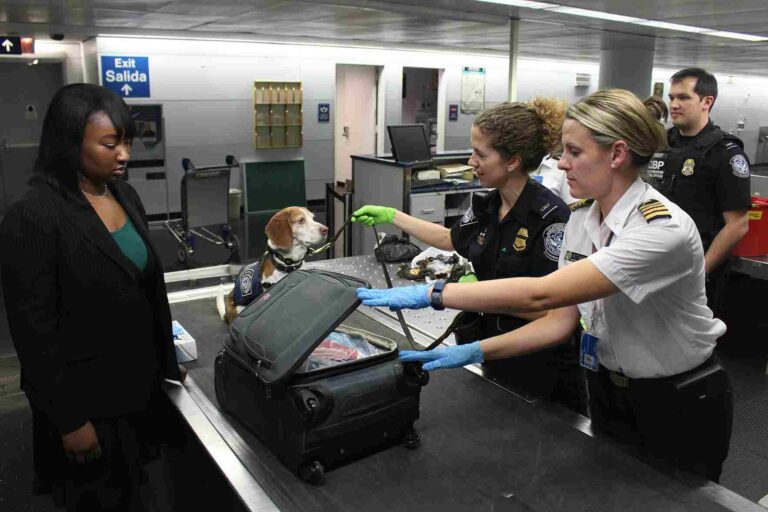
This rule exists at every international airport and it’s strictly enforced at the security screening point. If you get it wrong, your items get confiscated and you don’t get them back.
The rule is simple:
- Any liquid, gel, cream, paste, or aerosol in your carry-on must be in a container of 100ml or less.
- All those containers must fit inside one clear, resealable plastic bag, roughly 20cm x 20cm in size.
- You get one bag per person.
This applies to perfume, toothpaste, face cream, hand sanitiser, shampoo, sauces, drinks, everything liquid or semi-liquid. A full bottle of water you bought before the screening point will be taken. A 200ml bottle of moisturiser that’s half full still counts as a 200ml container and will be taken.
What you can do:
- Buy travel-size containers (100ml or less) and decant your products before packing
- Put full-size liquids in your checked baggage, not your carry-on
- Buy any drinks or toiletries after you’ve passed through security
Don’t pack a big bottle of anything liquid in your hand luggage and hope the security officer won’t notice. They check every bag.
Step 5: Arrive at the Right Time
This is non-negotiable. Give yourself enough time for everything that has to happen between arriving at the airport and boarding your flight.
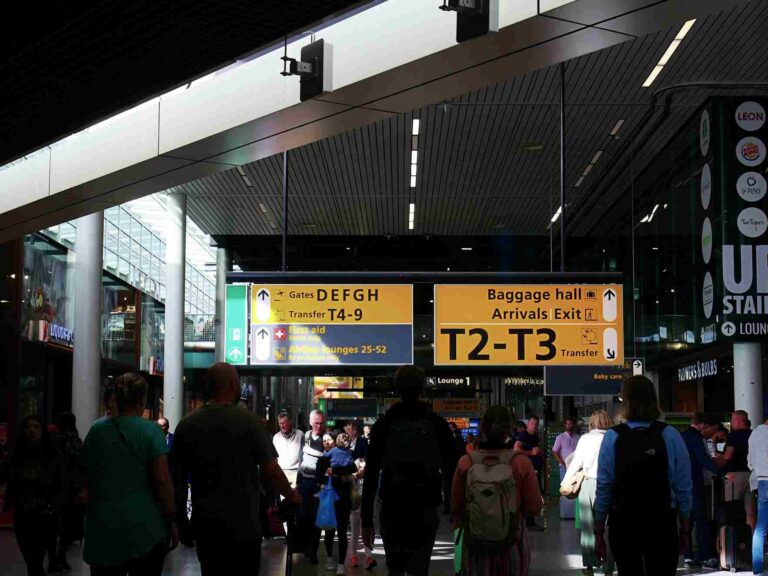
For international flights: arrive at least 3 hours before departure. At Lagos Murtala Muhammed International Airport especially, the departure hall can be chaotic. There’s check-in, baggage drop, immigration clearance (which involves passport control and sometimes additional checks), security screening, and then getting to your gate. Three hours sounds like a lot until you’re in a queue that isn’t moving.
For domestic flights: arrive at least 2 hours before departure. Domestic check-in is faster but Nigerian domestic airports, particularly Lagos and Abuja, get very busy. Domestic airlines also tend to run on compressed timelines and are less forgiving about late check-in.
Check-in desk closing times: most airlines close their check-in counter 45 minutes to 1 hour before departure. After that, you can’t check in regardless of what the reason is. Missing check-in cutoff means missing your flight.
If you’re travelling from Lagos Island or VI during peak hours, factor in traffic. A journey that takes 30 minutes at 9pm can take 2 hours at 7am on a weekday.
Step 6: Pack Your Carry-On Smartly
Your checked luggage goes in the hold and you won’t see it again until you land. Your carry-on is what you have access to during the flight. Pack it with that in mind.
Things that should always be in your carry-on:
- Passport and all travel documents
- Phone and charger (or power bank)
- Any medication you need during the flight or on arrival
- One change of clothes, especially for long-haul flights, in case your checked bag is delayed
- Laptop or tablet if you have one, these go through security separately in a tray
- Valuables, cash, cards, and jewellery should never go in checked luggage
Things that cannot go in your carry-on at all, regardless of size:
- Sharp objects: scissors, penknives, nail files with metal points
- Any firearm or weapon, including replicas
- Lighters, though one standard lighter is allowed on your person at some airports. Check your airline’s policy.
When you get to security, you’ll be asked to remove your laptop from your bag and place it in a separate tray. Remove your belt and anything in your pockets too. Having these things accessible rather than buried under your clothes saves you time and avoids holding up the queue.
Tunde’s First International Flight
Tunde, 26, is flying Lagos to London for the first time. His flight departs at 6:30am from Terminal 2 at MMIA. He did his online check-in the night before, downloaded his boarding pass to his phone and printed a copy. He put his passport, visa approval letter, yellow card, and hotel booking in a folder he tucked into his carry-on.
He woke up at 2:30am to leave by 3am. He arrived at the airport by 3:45am, more than 2.5 hours before departure. Check-in and baggage drop took 25 minutes. Immigration clearance took another 35 minutes. Security was 20 minutes. He was at his gate by 5:15am with over an hour to spare.
He didn’t rush. He didn’t panic. He sat at the gate, had a bottle of water he bought after security, and boarded calmly when his row was called.
That’s what good preparation looks like. Not lucky, just ready.
Pre-Flight Checklist
Go through this the evening before your flight:
- [ ] Online check-in completed, boarding pass downloaded and printed
- [ ] Passport validity confirmed (6+ months beyond travel date)
- [ ] Visa or entry document printed or accessible offline
- [ ] Hotel booking or accommodation confirmation saved and printed
- [ ] Yellow card located and packed in hand luggage
- [ ] Baggage allowance checked and luggage weight verified
- [ ] Liquids in carry-on all under 100ml and in one clear bag
- [ ] Laptop accessible in carry-on for security screening
- [ ] Valuables, medication, and documents all in carry-on, not checked luggage
- [ ] Departure time confirmed and arrival time at airport planned
- [ ] Transport to airport arranged and traffic factored in
FAQs
Can I use my phone to show my boarding pass at Nigerian airports? Most airlines accept a digital boarding pass on your phone screen. However, some airlines and some Nigerian airport checkpoints still request a printed copy, particularly at immigration. Print one anyway. It takes two minutes and removes any risk.
Do I need to print my e-visa or can I show it on my phone? Many countries issue e-visas as a PDF approval letter that you’re supposed to print and carry. Even if the airline accepts your phone screen, immigration officers at your destination often want a physical copy. Print it. The same applies for your return ticket and hotel booking.
What happens if my carry-on bag is overweight at the gate? If your carry-on exceeds the airline’s size or weight limit, the airline may ask you to check it at the gate and pay the applicable fee. This varies by airline. Weigh and measure your carry-on before you leave home if you’re unsure.
Do I need a yellow card for all international flights from Nigeria? Not for every destination, but many countries require proof of yellow fever vaccination for travellers coming from Nigeria. Your airline may also ask for it during check-in. Keep your yellow card in your travel document folder every time you fly internationally, regardless of destination.
Can I take food in my carry-on? Solid food is generally allowed in your carry-on. Liquid or semi-liquid foods like soups, stews, sauces, or yoghurt fall under the liquids rule and must be in 100ml containers or go in your checked bag. Snacks for the flight are fine.
Prepare the Night Before, Not at the Airport
Everything on this list can be handled before you ever walk through those departure hall doors. The airport is not where you sort your documents, weigh your bag, or figure out your boarding pass.
Do the preparation at home, get to the airport early, and the experience becomes straightforward rather than stressful.
If you’re a Nigerian planning to japa and this is your first international trip, the passport and airport process is just the start. DeyWithMe has destination-specific guides for the UK, Canada, Australia, and more, covering everything from visa applications to what to expect when you land.