Let’s be honest with each other.
Getting a Nigerian passport has a reputation. Long queues. Expired portals. Agents promising “express” processing for money you’ll never see again. If you’ve heard these stories, or lived them, this article is for you.
The process has genuinely improved in some ways. But it’s still not frictionless, and the fees have gone up significantly. If you know what to expect going in, you can get your international passport without losing your mind or your money.
This is everything you need to know, laid out plainly.
Quick Summary
- Nigeria’s e-passport is a biometric travel document issued by the Nigerian Immigration Service (NIS), available in 5-year and 10-year options.
- You must have a valid NIN before you can apply. No NIN, no passport.
- As of September 2025, fees are ₦100,000 (32-page, 5-year) and ₦200,000 (64-page, 10-year) for applications within Nigeria.
- Apply only through the official NIS portal at immigration.gov.ng. Do not pay anyone outside that portal.
- Standard processing targets 6 weeks, but real-world timelines vary. If you have a travel deadline, apply at least 3 months early.
What Is the Nigerian International Passport (e-Passport)?
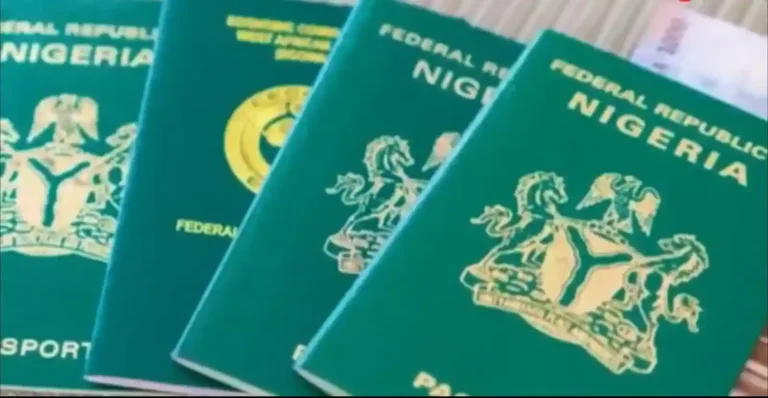
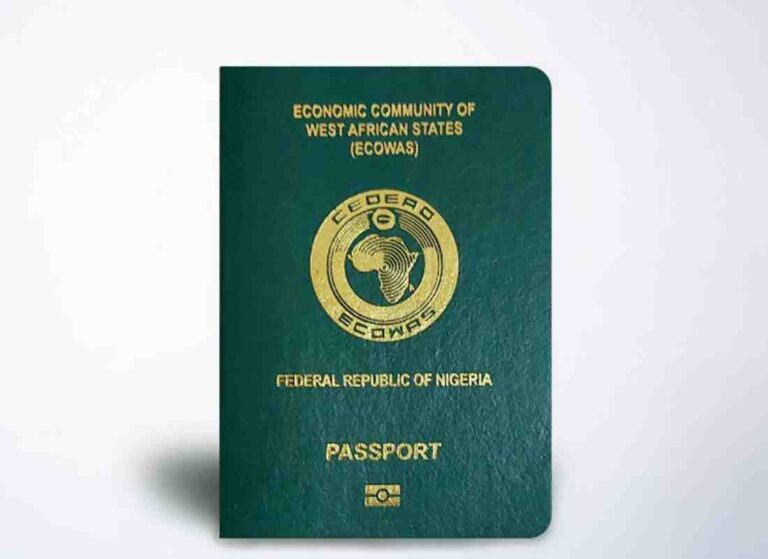
Nigeria’s international passport is a biometric travel document issued by the Nigerian Immigration Service (NIS). The current version is the e-passport, which has a chip embedded in the cover storing your biometric data, including your fingerprints and facial photo.
It’s the document you need for any international travel, visa applications, and most immigration processes abroad. If you’re planning to japa, apply for a Canadian study permit, sit for IELTS registration that requires travel ID, or even just visit Ghana, this is your starting point. Everything else comes after.
There are two validity options: the 5-year (32-page) and the 10-year (64-page). The 10-year costs more upfront but gives you more mileage. If you’re planning to travel frequently or apply for multiple visas over the years, the 10-year is the more practical choice.
Who Can Apply?
Any Nigerian citizen. That includes:
- Adults (18 and above) applying independently
- Minors (under 18) applying through a parent or legal guardian
- Nigerians in the diaspora applying through Nigerian embassies or consulates in their country of residence
You don’t need to live in Lagos or Abuja to apply. Applications can be submitted at any NIS state command office across the country, and there are NIS offices at major airports as well.
What You Need Before You Start
This is where many people trip up. Get these ready before you even open the portal:
- National Identification Number (NIN) — Non-negotiable. Your NIN must be enrolled and active before you can apply. If you haven’t sorted this, start at any NIMC enrolment centre.
- Birth certificate or declaration of age — Especially important for first-time applicants.
- Valid means of ID — For renewals, your old passport. For fresh applications, a national ID card, voter’s card, or driver’s licence will work.
- Passport photographs — White background, recent. You’ll still take biometrics at the NIS office, but some stages ask for physical photos.
- Payment — Paid online via the NIS portal using a debit card or bank transfer. Have your card ready and confirm your bank’s online transaction limits before you start.
How to Apply: Step by Step
The official channel is the NIS portal at immigration.gov.ng. Here’s how it works:
- Create an account on the portal using your email address and NIN.
- Fill out the application form online. Go slowly here. Check your name, date of birth, and state of origin carefully. Errors cause delays and sometimes require you to start over.
- Select your passport type (32-page or 64-page, 5-year or 10-year) and pay the required fee on the portal.
- Book an appointment at the NIS office nearest to you. Pick a date and time that works for you.
- Show up on your appointment date with all your original documents. You’ll have your photo taken and biometrics captured at the office.
- Track your application online using your application number. When your passport is ready, you’ll receive a notification to come collect it.
That’s the official process. Straightforward on paper. In practice, the portal sometimes acts up, appointments can be hard to get in high-demand states like Lagos and Abuja, and processing can run longer than the stated timeline. None of that means it’s impossible. It just means plan ahead.
How Much Does It Cost?
All fees are paid directly on the NIS portal. Do not pay anyone outside the portal.
As of September 1, 2025, the official fees for applications made within Nigeria are:
- 32-page, 5-year passport: ₦100,000
- 64-page, 10-year passport: ₦200,000
If you’re applying from abroad through a Nigerian embassy or consulate, the fees are:
- 32-page, 5-year: $150
- 64-page, 10-year: $230
These fees doubled from what they were in September 2024 (₦50,000 and ₦100,000 respectively), so if you’ve seen older numbers online, that’s why they don’t match anymore.
Yes, ₦100k to ₦200k is a lot of money. That’s just the reality right now. Budget for it and pay it only on immigration.gov.ng. There are no legitimate “processing fees” on top of what the portal charges. If anyone asks you to pay extra, that is not an official cost.
How Long Does It Actually Take?
Officially: 6 weeks for standard processing.
In practice: it depends on the state office, current demand, and how early you booked your appointment. People in Lagos and Abuja often wait longer because the volume is higher. Some applicants get their passports in 4 weeks. Others wait 3 months or more.
To give you a realistic picture, consider Amara, a 24-year-old in Benin City who started her passport application in September because she was targeting a January arrival in the UK for her master’s programme. She booked her appointment for October, had her biometrics done by mid-October, and collected her passport in late November. Roughly 6 weeks, and she had enough breathing room to start her visa application in December. That’s the kind of planning buffer you want.
What to do: Apply as early as possible. If you have a visa deadline or travel date in mind, give yourself at least 3 months from when you start. Don’t apply in February and expect to travel in March.
Renewing Your Nigerian Passport
If your passport is expired or expiring soon, the renewal process follows the same steps as a fresh application. You still go through the portal, pay the fee, book an appointment, and show up for biometrics.
A few things to note:
- Don’t wait until it’s already expired. Most countries require at least 6 months of passport validity beyond your travel date. If your passport expires in August and you want to travel in June, you already have a problem. Start early.
- Bring your old passport to your appointment. You’ll likely hold onto it until you collect the new one.
- If your old passport has existing visas in it, like a UK, US, or Schengen visa, ask the NIS office what happens with those. In many cases you’ll carry both documents when you travel, but confirm this based on the destination country’s rules.
Common Mistakes to Avoid
1. Paying agents to fill your online form The NIS portal is self-service. You don’t need a third party to create your account or complete your application. The portal walks you through it. Save that money for the actual passport fee.
2. Name or detail mismatches across your documents If your name appears differently on your NIN, birth certificate, and passport application, you will run into problems. Align all your documents before you apply.
3. Applying too close to your travel or visa deadline Six weeks is the official target, not a guarantee. Give yourself 3 months minimum if you’re working toward a specific date.
4. Using unofficial websites Some sites mimic the NIS portal. The only official site is immigration.gov.ng. Don’t Google “passport application Nigeria” and click the first paid ad that shows up.
5. Not using the tracking system Once you’ve applied, you can track your passport status online using your application number. Use it. Don’t depend on an agent or a “connection” at NIS to tell you where your document is.
FAQs
Can I apply for a Nigerian passport without a NIN? No. NIN is mandatory for all passport applications. If you don’t have one yet, register at any NIMC enrolment centre before starting your passport application.
Why did passport fees increase so much? The NIS increased fees effective September 1, 2025, roughly doubling the rates from the previous year. The official explanation cited operational costs and infrastructure. Whatever the reason, the new rates are what they are. Budget accordingly.
How do I know when my passport is ready for collection? Check your application status on the NIS portal using your application number. You should also receive an email or SMS notification when it’s ready for collection.
My passport expires in 3 months. Can I still travel? It depends on your destination. Most countries require at least 6 months of validity beyond your travel date. Some are more lenient. Check the entry requirements for your specific country, and start the renewal process now rather than later.
I live abroad. How do I renew my Nigerian passport? Apply through the Nigerian embassy or consulate in your country. The process is similar but the fees are in USD ($150 for 32-page, $230 for 64-page). Contact your nearest Nigerian mission directly for current appointment procedures.
What to Do Next
Your Nigerian passport is the foundation of everything else. Visas, relocation, work permits, school applications abroad. Nothing moves without it.
The fees are steep now, no sugarcoating that. But the process is manageable if you go through the right channel, prepare your documents in advance, and give yourself enough time.
Once you have your passport sorted and you’re ready to figure out where you’re actually going, DeyWithMe has free tools to help you plan, from proof of funds calculators to visa route guides for the UK, Canada, Australia, and more. Start with the passport. The rest follows.