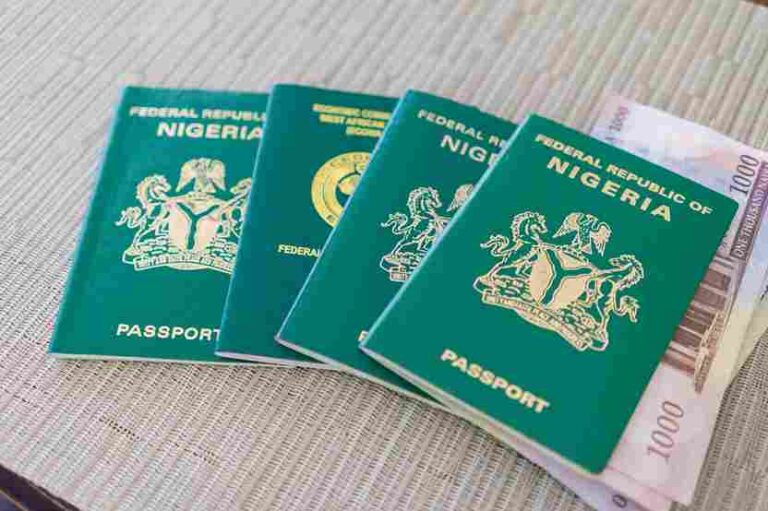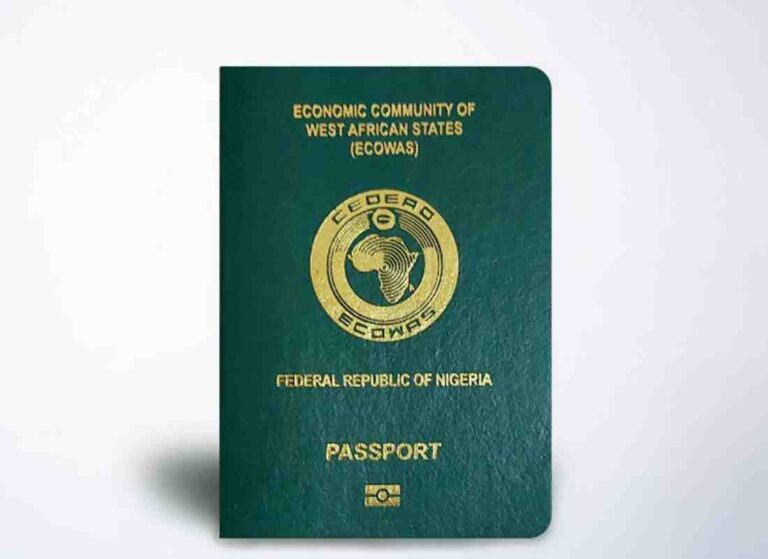
You’re filling out a visa application online and the form asks for your passport expiry date. You flip to the back of your passport and the date staring back at you is three months away. Or you’ve already started packing for a trip abroad and someone mentions that your destination country requires 6 months of passport validity. Or you open your drawer and the passport you were sure was there simply isn’t.
Any of these scenarios means one thing: you need a new passport, and you need to understand the process correctly before you start. Renewal and replacement are not complicated, but they have specific requirements depending on your situation, and getting the details wrong wastes time you might not have.
This guide covers every renewal and replacement scenario: expired passports, damaged ones, data corrections, lost or stolen passports, and what to do if fraud is suspected on your document.
Quick Summary
- Renewing a Nigerian passport follows the same online process as a fresh application: NIS portal, payment, biometric appointment.
- Your old passport is a required document at your appointment. Bring it even if it’s expired or damaged.
- As of September 2025, renewal fees are the same as new applications: ₦100,000 (32-page, 5-year) and ₦200,000 (64-page, 10-year).
- Lost or stolen passports require a police report and an affidavit before you can apply for a replacement.
- Don’t wait until your passport expires before starting. Most countries need at least 6 months of validity on your passport beyond your travel date.
When Should You Actually Renew?
Before getting into the how, let’s settle the when.
Don’t wait for your passport to expire. The standard advice is to renew when you have 12 months or less remaining, but if you’re actively planning to travel or apply for a visa, that window needs to be wider.
Here’s the practical rule: most countries require your passport to be valid for at least 6 months beyond your intended travel date. So if you want to travel in June, your passport needs to be valid until at least December. If it expires in October, you already have a problem, even though it technically hasn’t expired yet.
Add to that the NIS processing timeline of roughly 6 weeks (sometimes longer in Lagos and Abuja), and you should really be renewing at least 3 to 4 months before any hard travel or visa deadline.
If your passport is already expired, none of this changes the process. You still apply the same way. You just lose the buffer time.
Renewing an Expired or Soon-to-Expire Passport
This is the most common scenario and the most straightforward. The renewal process mirrors a fresh application almost exactly.
Steps:
- Go to immigration.gov.ng and log into your existing account, or create one if you don’t have one yet.
- Start a new passport application on the portal, selecting “renewal” as the application type.
- Fill in your details carefully. As always, everything must match your NIN record exactly.
- Select your passport type (32-page or 64-page) and pay the fee on the portal: ₦100,000 or ₦200,000 as applicable.
- Book a biometric appointment at your nearest NIS office.
- Show up on appointment day with your documents.
Documents to bring for a renewal:
- Your old passport (expired or not, bring it)
- NIN slip
- Recent passport photographs (white background, 4 copies)
- Application confirmation slip (printed)
- Payment receipt (printed)
- Appointment confirmation slip (printed)
- A valid government ID if your old passport is severely damaged or the data page is unreadable
The NIS officer will keep your old passport during processing. You’ll get it back when you collect the new one. Don’t plan on using it for travel in the meantime.
Replacing a Damaged Passport
A damaged passport is one where the booklet is physically compromised: torn pages, water damage, a defaced data page, a broken spine, or anything that makes the document unreliable for travel.
The replacement process is the same as a renewal in terms of portal steps and fees. The difference is at the appointment. You must bring the damaged passport. Do not throw it away thinking you’ll apply as if it never existed. The NIS needs to see it and record the reason for replacement.
At your appointment, be straightforward with the officer about what happened to the passport. They’ve seen everything. Trying to hide the extent of damage or presenting a heavily damaged passport as simply “expired” can slow things down.
If the damage is severe enough that the data page is unreadable, bring additional identity documents to establish your record: your NIN slip, birth certificate, and any other government-issued ID you have.
Replacing a Lost or Stolen Passport
This situation requires extra steps before you can even start the portal application.
Step 1: Get a police report. Report the loss or theft at the nearest police station and obtain an official police report. This is a required document for a lost passport replacement. Keep the original.
Step 2: Swear an affidavit. Get an affidavit of loss from a magistrate court or notary public, stating the circumstances under which the passport was lost. Bring this along with your police report.
Step 3: Apply on the NIS portal. With those two documents ready, proceed with the standard online application process, same portal, same fee, same appointment booking.
At the appointment, bring:
- Police report (original)
- Affidavit of loss (original)
- NIN slip
- Birth certificate
- Valid government-issued ID
- Passport photographs
- Printed application, payment, and appointment slips
The NIS will verify your identity against their existing biometric records before issuing the replacement. This is why the process takes the same time as a regular renewal, sometimes slightly longer.
One important point: if your lost passport still has valid foreign visas in it (UK, Schengen, US), those visas don’t transfer to your new passport. They’re linked to the old passport number. When you travel, you’d normally need to carry both documents to show the visa, but since the old passport is lost, contact the relevant embassy for guidance on your specific visa. Don’t assume the visa is simply gone.
Correcting Wrong Data on Your Passport
This applies when your existing passport has an error: wrong date of birth, misspelled name, incorrect gender, or any other factual inaccuracy that needs to be fixed.
The correction process is more involved than a straight renewal because the NIS needs to understand the source of the error and verify what the correct information should be.
Before applying, gather documents that prove what the correct information is:
- NIN slip showing the correct details
- Birth certificate
- Any court orders or affidavits if names have legitimately changed or if you’re correcting a longstanding discrepancy
Apply through the portal as you would for any renewal. At your appointment, explain clearly to the officer that you’re correcting a data error and present your supporting documents. Be honest about where the discrepancy came from, whether it was a clerical error on a previous application or a longstanding mismatch across your documents.
If the error stems from a mistake on your NIN, fix the NIN at NIMC first. Issuing a corrected passport based on wrong NIN data doesn’t solve anything; it just moves the problem.
What Happens If Fraud Is Suspected on Your Passport
This is less common but worth addressing. If your passport has been flagged as potentially fraudulent, either because it was reported as lost and then found, because someone else used your identity, or because a border officer flagged an anomaly, you cannot simply renew it normally.
In this situation, the NIS will typically ask you to present yourself in person with a full set of identity documents for verification before any new passport is issued. You may be asked to provide additional documentation depending on the nature of the concern.
If you’re aware your passport has been flagged or compromised in any way, go to the NIS office directly rather than starting online. Explain the situation before applying. Trying to apply as if nothing happened and having it surface at the appointment creates a bigger problem.
Ngozi’s Renewal Timeline
Ngozi is 31 and lives in Enugu. She’s preparing to apply for a UK skilled worker visa and notices in January that her passport expires in August. Her visa application target is April.
She starts the renewal process in January. She logs into the NIS portal, pays ₦200,000 for the 64-page, 10-year passport, and books an appointment for late January at the Enugu NIS office. She brings her expired passport, NIN slip, photographs, and all her printed slips.
Her biometrics are captured without issues. She tracks her application online and collects her new passport in early March, giving her roughly 6 weeks from appointment to collection. She starts her visa application in March with a passport that won’t expire until 2035.
That’s what good planning looks like. She didn’t wait until April to notice the problem.
Renewal Document Checklist
Use this before your appointment:
- [ ] Old passport located and ready to bring (expired, damaged, or valid)
- [ ] NIN slip confirmed with correct details
- [ ] Birth certificate available (original plus photocopy)
- [ ] 4 passport photographs, white background, recent
- [ ] Application confirmation slip printed
- [ ] Payment receipt printed
- [ ] Appointment confirmation slip printed
- [ ] Police report obtained (lost/stolen passport only)
- [ ] Affidavit of loss obtained (lost/stolen passport only)
- [ ] Supporting documents for data correction prepared (if applicable)
- [ ] Photocopies of all originals made
FAQs
Can I travel on my old passport while waiting for my renewal to be processed? No. When you submit your old passport at your NIS biometric appointment, the officer keeps it for the duration of processing. You won’t have it to travel with. If you have urgent travel before your new passport arrives, contact the NIS office directly to discuss your options. Don’t book travel expecting to use your old passport after submitting it.
I found my old passport after reporting it lost. What do I do? Do not use it to travel. A passport that has been reported lost is flagged in the system. Using a flagged passport at a border can cause serious problems. Take it to the NIS office with your original police report and explain that you found it. They’ll advise you on how to proceed, which may mean continuing with the replacement process or cancelling the replacement application.
My passport renewal has been processing for over 8 weeks. What do I do? Check your status on the NIS portal first. If it’s been more than 8 weeks with no update, visit the NIS office where you did your biometrics in person. Bring your application number and payment receipt. Ask for a status update directly. Persistent follow-up in person tends to move things faster than waiting on the portal.
Can I renew my Nigerian passport if I’m currently outside Nigeria? Yes. Apply through the Nigerian embassy or consulate in your country. The process is similar but the fees are in US dollars ($150 for 32-page, $230 for 64-page). Contact your nearest Nigerian mission for their specific appointment and document requirements, as procedures vary slightly between missions.
Does renewing my passport affect my existing visas? Visas in your old passport remain valid even after you get a new passport. When you travel, carry both your new passport and your old one to show the visa. Some countries allow you to travel on just the new passport if the visa is within its validity period and you can prove the connection to the old passport, but carrying both is the safest approach.
Start Your Renewal Before You Need To
The worst time to realise your passport is expiring is when you’re already in the middle of a visa process or have flights booked. The best time to renew is before any of that pressure exists.
Check your passport expiry date today. If it’s within 12 months, or if you have any travel plans in the next year, start the renewal process now.
If you’re also working out what visa route to take after your passport is sorted, DeyWithMe has destination-specific guides and planning tools for the UK, Canada, Australia, and more, built specifically for Nigerians at this stage of the japa journey.