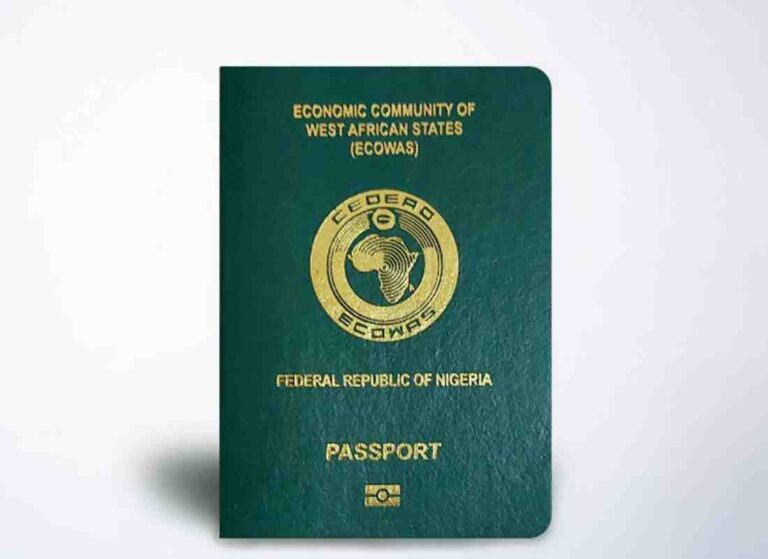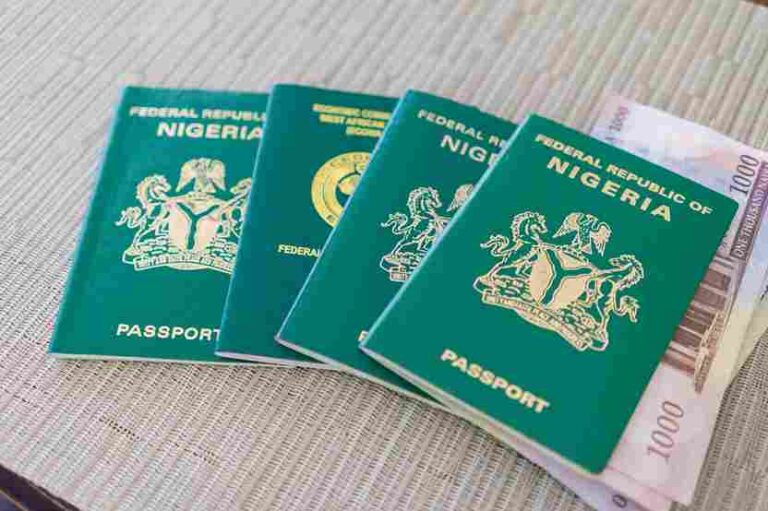
Someone sees ₦200,000 mentioned online and assumes it’s a scam or an agent markup. Someone else pays ₦50,000 because they found an older article from 2024 and thinks that’s still the current fee. A third person pays through a “consultant” who charges ₦280,000 and claims the extra covers “processing.”
All three people are dealing with the same basic confusion: the official Nigerian passport fee structure is not widely understood, and outdated information spreads faster than updated facts.
This article gives you the current, correct fee breakdown, explains what the fee actually covers, what it doesn’t, and what you should never pay for.
Quick Summary
- As of September 1, 2025, Nigerian passport fees are ₦100,000 (32-page, 5-year) and ₦200,000 (64-page, 10-year) for applications within Nigeria.
- These fees apply to both adults and children. There is no reduced fee for minors.
- Diaspora applicants pay in USD: $150 for the 32-page and $230 for the 64-page, regardless of the September 2025 domestic increase.
- The official fee covers the passport booklet only. Courier delivery, if you choose it, costs extra.
- Pay only through the NIS portal at immigration.gov.ng. Any payment made outside the portal is not an official charge.
The Current Official Fees (September 2025)
The Nigerian Immigration Service revised passport fees effective September 1, 2025. These are the only legitimate fees for passport applications within Nigeria:
| Passport Type | Validity | Official Fee |
| 32-page booklet | 5 years | ₦100,000 |
| 64-page booklet | 10 years | ₦200,000 |
These rates apply whether you are a first-time applicant or renewing. They apply to adults and children equally. There is no age-based discount.
Before September 2025, the fees were ₦50,000 and ₦100,000 respectively (those rates had been in place since September 2024). If you’ve seen either of those figures on another website, that information is now outdated.
Always verify current fees directly on immigration.gov.ng before you pay, since the NIS can revise fees again in the future.
Fees for Nigerians Applying Abroad
If you live outside Nigeria and are applying through a Nigerian embassy or consulate, the fee structure is different and is charged in US dollars:
| Passport Type | Validity | Fee (Diaspora) |
| 32-page booklet | 5 years | $150 |
| 64-page booklet | 10 years | $230 |
These diaspora fees were not affected by the September 2025 domestic increase. So if you’re in the UK, US, Canada, or anywhere else and applying through a Nigerian mission, you pay the dollar amounts above.
Payment methods and processes vary by embassy. Some Nigerian missions have their own online portals, others require in-person payment. Contact your nearest Nigerian embassy or consulate to confirm their current payment procedure before you start.
What the Fee Covers and What It Doesn’t
This is where a lot of confusion comes from. The official passport fee covers the production and issuance of the passport booklet itself. That’s it.
It does not automatically cover:
- Courier or home delivery: If you want your passport delivered to your address instead of collecting it at the NIS office, there is a separate courier fee. The amount depends on the delivery service and your location. This is optional. You can always collect in person at no extra cost.
- Document correction or amendment: If you need to fix an error on an existing passport, that’s a separate process with its own fees.
- Emergency travel documents: If you need an emergency certificate or emergency passport due to urgent travel, that process is handled differently and costs are separate. Check with the NIS directly for current emergency document fees.
The official fee does not cover agent charges, “connection fees,” or anything else anyone asks you to pay outside the portal. Those are not NIS charges.
Adults vs Children: Is the Fee Different?
No. As of the current fee structure, there is no reduced rate for children’s passports. A parent applying for a 5-year passport for their 3-year-old pays the same ₦100,000 as an adult applying for themselves.
This is worth knowing because some parents assume there’s a junior or child rate. There isn’t one currently. Budget the full amount regardless of the applicant’s age.
Children’s passports are issued with 5-year validity only, regardless of whether you choose the 32-page or 64-page booklet. So unlike adult applications where the 10-year option is available, for children under 18, the maximum validity you’ll get is 5 years.
Why Did the Fees Go Up?
The NIS has not published a detailed public breakdown of the reasons behind the September 2025 increase. The broad explanation from official statements pointed to operational costs and the need to upgrade passport infrastructure.
What we know factually is that fees doubled from the previous year’s rates, going from ₦50,000 to ₦100,000 for the 32-page, and from ₦100,000 to ₦200,000 for the 64-page.
This is a significant increase for most Nigerian households. If you’re budgeting for your japa journey, factor in the full passport cost alongside IELTS registration, visa application fees, and proof of funds requirements. None of these are cheap, and it’s better to know the real numbers upfront than to be caught short halfway through your plans.
What Bisi Actually Paid
Bisi is 29, lives in Ibadan, and is applying for a 10-year Nigerian passport as part of her preparation to apply for a Canadian study permit. She went through the NIS portal herself, without an agent.
Here’s what she actually paid:
- Passport fee (64-page, 10-year): ₦200,000, paid directly on the NIS portal
- Courier delivery: ₦5,000 (she opted for home delivery to avoid taking another day off work to collect)
- Passport photographs: ₦1,500 at a studio near her house
- Photocopies and printing: about ₦500
Total out of pocket: roughly ₦207,000.
She didn’t pay an agent. She didn’t pay any “express fee.” Her passport arrived via courier about 7 weeks after her biometric appointment.
That’s the realistic cost picture for someone doing it properly.
What You Should Never Pay For
Let’s be direct about this.
The only legitimate payment in the Nigerian passport process is the official fee paid on immigration.gov.ng. Everything else is either optional (like courier delivery) or illegitimate.
You should not pay for:
- Someone to “process” your application or “connect” you to an NIS officer
- An “express” or “fast-track” fee outside the portal
- A higher fee than what the portal charges, with the difference going to a middle person
- A “registration fee” before you can access the form
- Any payment to an unofficial bank account or mobile money number
Some agents do legitimately help people fill the online form if they’re not comfortable doing it themselves. That’s a service people can choose. But the passport fee itself goes to NIS through the portal, and what the agent charges for their assistance is separate and should be agreed upfront. Don’t let anyone bundle it together and hand over one lump sum without knowing what’s what.
FAQs
Are the current passport fees the same for renewals and fresh applications? Yes. Whether you’re applying for the first time or renewing an expired or expiring passport, the fees are the same: ₦100,000 for the 32-page, 5-year and ₦200,000 for the 64-page, 10-year, for applications within Nigeria.
Can I get a refund if I paid and then couldn’t complete my application? The NIS refund process is not straightforward, and there is no clear public-facing policy on this. If you paid but could not complete your application due to a portal error or other issue, contact NIS support with your payment receipt as evidence. Don’t assume you’ll get a refund automatically.
Is there a cheaper or subsidised passport option for students or low-income applicants? Not currently. The NIS does not advertise any concessionary rate for students, unemployed applicants, or any other category. Everyone pays the same fee based on passport type, not personal circumstances.
If I paid the old fee before September 2025, do I need to top up? If your payment was processed and your application was active before the fee change, you should not be asked to pay the difference. If an officer is requesting a top-up payment for an application that predates the increase, ask for official documentation of that requirement. Don’t pay informally.
Do diaspora Nigerians pay the same dollar fee regardless of which country they’re in? The dollar fees ($150 and $230) are the NIS standard for overseas applications, but individual embassies may add a small administrative or processing charge on top. Check with your specific Nigerian mission for the exact amount you’ll be charged.
Budget the Real Number Before You Start
The Nigerian passport now costs between ₦100,000 and ₦200,000 depending on what you choose. That’s the floor, not a ceiling, once you factor in photographs, printing, and optional delivery.
Plan for it. Pay it through the right channel. And don’t let anyone tell you the fee is higher than what the portal shows, because it isn’t.
If you’re ready to start your application and want a step-by-step walkthrough of the NIS portal process, our online application guide takes you through every screen from account creation to booking your biometric appointment.