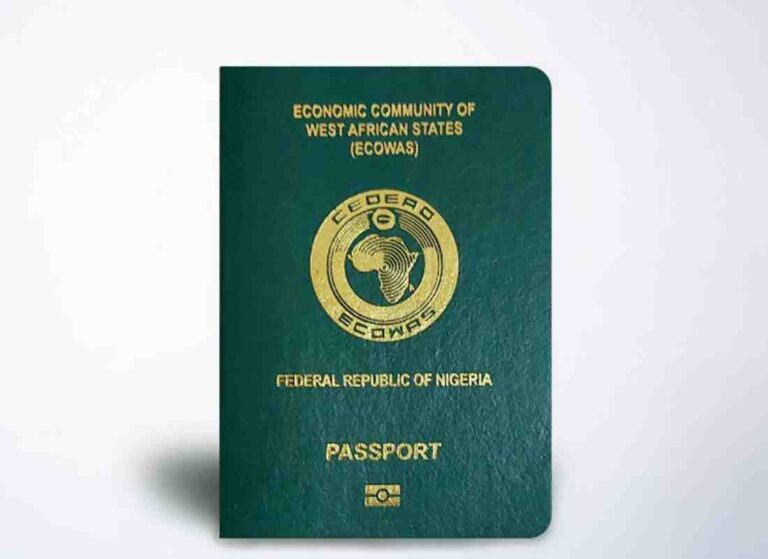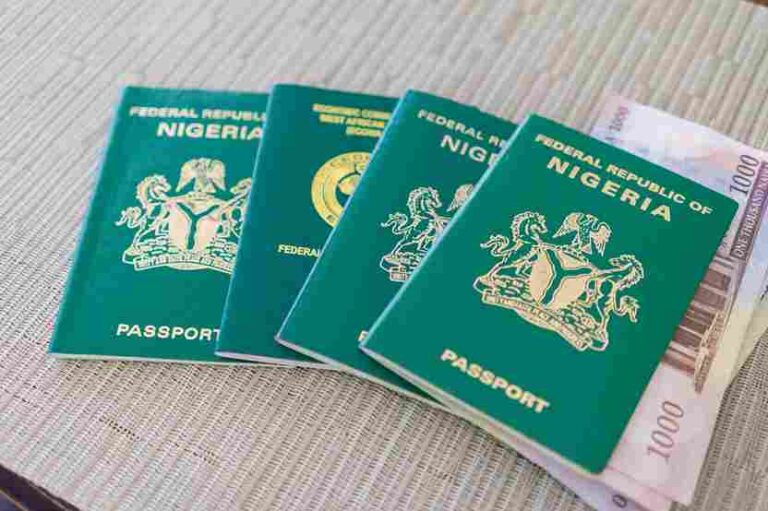
You’ve been living in the UK for three years. Your Nigerian passport expired six months ago. You haven’t needed it because you travel on your British leave to remain, but now you want to visit family in Lagos and your Nigerian passport is the one they ask for at the Nigerian immigration counter on arrival.
Or you’re in the US, your passport expires in four months, and your employer is asking for a valid travel document for an upcoming work trip.
Either way, you can’t just log onto immigration.gov.ng and process it like you would from Nigeria. The domestic NIS portal is for applications within Nigeria. If you’re abroad, you go through your nearest Nigerian mission, and the process has its own quirks.
Here’s what you need to know.
Quick Summary
- If you live outside Nigeria, you apply for your passport through the Nigerian embassy or consulate in your country, not through the domestic NIS portal.
- The fees for diaspora applications are $150 (32-page, 5-year) and $230 (64-page, 10-year), unchanged by the September 2025 domestic increase.
- Most Nigerian missions now use online appointment systems. Walk-ins are rarely accepted.
- Document requirements broadly mirror the domestic process, but individual missions have specific variations. Always confirm with your consulate directly before your appointment.
- Processing times abroad are often longer than within Nigeria. Plan for 8 to 12 weeks minimum in busy missions like London and New York.
The Basic Difference: Mission vs Domestic Application
When you apply from within Nigeria, the NIS portal handles everything from form submission to payment to appointment booking. When you apply from abroad, each Nigerian embassy or high commission runs its own application process, sometimes with its own portal, its own appointment system, and its own specific document requirements.
The underlying process is the same in principle: you fill a form, pay the fee, book an appointment, and show up for biometrics. But the logistics differ by location. A Nigerian applying in London goes through the Nigerian High Commission in Northumberland Avenue. Someone in New York goes through the Nigerian Consulate General there. Someone in Atlanta has a different office. Someone in Dublin, Toronto, or Pretoria has yet another.
This is why “just check the website” is genuinely useful advice here, not a cop-out. The requirements for your specific mission matter more than the general framework.
That said, the general framework is consistent enough to be worth understanding before you contact your mission.
Fees for Diaspora Applicants
Nigerian passport fees abroad are charged in US dollars and were not affected by the September 2025 domestic increase that raised fees to ₦100,000 and ₦200,000 within Nigeria.
The standard diaspora fees are:
- 32-page, 5-year passport: $150
- 64-page, 10-year passport: $230
These are the NIS-set rates. Some missions may add a small administrative charge on top. Confirm the exact amount with your specific consulate before your appointment, so you’re not caught short on payment day.
Payment methods vary. Some missions accept card payments, others require a money order or cashier’s check made out to the Nigerian Consulate. Very few accept cash. Check your mission’s payment instructions carefully because showing up with the wrong payment type can mean being turned away.
How to Find and Book Your Appointment
Most Nigerian missions now require appointments, booked either through a mission-specific portal, an email request, or in some cases a third-party appointment system. Walk-in applications are not accepted at most busy missions.
To find your nearest Nigerian mission:
- Search for “Nigerian High Commission” (if you’re in a Commonwealth country like the UK, Canada, or Australia) or “Nigerian Embassy” or “Nigerian Consulate General” depending on your location.
- Go directly to that mission’s official website for their current appointment booking process.
Don’t rely on general Google results or third-party booking sites. Some of those sites charge fees to “help” you book an appointment that is free to book directly through the mission.
Appointment slots at high-volume missions like London and New York fill up weeks or months in advance. Book as early as possible once you’ve confirmed your documents are in order.
Core Documents You’ll Typically Need
While each mission has its own specific list, the following documents are required at almost every Nigerian mission for a passport application or renewal:
For all applicants:
- Current or expired Nigerian passport (for renewals)
- NIN slip or evidence of NIN registration
- Recent passport photographs, white background, taken within the last 3 months
- Completed application form (downloaded from the mission website or filled online)
- Proof of payment
- Proof of residence in the country where you’re applying (utility bill, bank statement, or similar)
For first-time applicants (no previous Nigerian passport):
- Nigerian birth certificate
- A valid government-issued Nigerian ID (national ID card, voter’s card, or similar) if available
- Guarantor form, completed and signed by a Nigerian citizen with a valid Nigerian passport, confirming your identity
For children’s applications:
- Child’s birth certificate
- Nigerian parent’s passport or NIN
- Passport photographs of the child
- Letter of consent from both parents if only one parent is present, notarised if required
- Custody documents for single parents or guardians
This is the common framework. Your specific mission may require additional items or have slightly different specifications for some of these. Always download and read the current requirements from your mission’s official website before preparing your documents.
The Guarantor Requirement: What It Actually Means
The guarantor requirement catches a lot of people off guard, especially first-time applicants who have never had a Nigerian passport before.
A guarantor is a Nigerian citizen with a valid Nigerian passport who is vouching for your identity. They fill a form confirming who you are and that the information in your application is accurate. They sign it and in some cases have it stamped or notarised.
The guarantor doesn’t have to be present at your appointment in most cases, but their details (including their passport number) go on the form, and some missions may verify the information.
For people who have been abroad for a long time and have an existing Nigerian passport they’re renewing, the guarantor requirement usually doesn’t apply. Your old passport establishes your identity record already. But confirm this with your specific mission, because some missions apply the requirement more broadly than others.
If you’re a first-time applicant abroad with no Nigerian passport history, start identifying a guarantor early. It needs to be someone whose Nigerian passport is current and valid, not someone whose passport expired two years ago.
Processing Times Abroad: Be Realistic
Within Nigeria, the NIS targets 6 weeks for standard processing. Abroad, timelines are typically longer because missions handle smaller volumes with fewer staff and sometimes ship completed passports back to Nigeria for certain production stages.
At busy missions like London and New York, realistic timelines are often 8 to 12 weeks. Some people report longer waits during peak periods. Missions in quieter locations may be faster.
There is generally no guaranteed express processing at Nigerian missions abroad. If you see someone online advertising “fast-track” passport processing at a foreign consulate for a fee, be very cautious. That is not an official service.
Plan your application timeline around the realistic estimate, not the optimistic one. If you have a travel deadline, work backwards from it and apply at least 3 months before you need the passport.
Adaeze in London
Adaeze is 28, has lived in the UK for four years on a skilled worker visa, and her Nigerian passport expired a year ago. She wants to visit Nigeria for Christmas and needs a valid Nigerian passport.
She goes to the Nigerian High Commission’s website in London, reads the current requirements, and downloads the application form. She confirms the fee and payment method. She books an appointment online, getting a slot three weeks out.
She gathers her expired passport, NIN slip, recent photographs, completed form, proof of her London address, and her payment. She shows up on appointment day with everything in a folder.
Her biometrics are captured. The High Commission tells her to expect 8 to 10 weeks. She gets her passport in 9 weeks, just in time to confirm her Christmas travel booking.
That’s the process working as it should. The key was that she checked the specific requirements for the London mission rather than assuming they were identical to what her cousin did in Abuja.
Document Checklist for Diaspora Applications
Use this as a starting point, then verify against your specific mission’s requirements:
- [ ] Current or expired Nigerian passport (for renewals)
- [ ] NIN slip or NIN confirmation document
- [ ] Birth certificate (first-time applicants or if requested)
- [ ] 4 recent passport photographs, white background
- [ ] Completed application form from mission website
- [ ] Proof of payment in the correct format for your mission
- [ ] Proof of residence in your current country (utility bill, bank statement, etc.)
- [ ] Guarantor form completed and signed (first-time applicants)
- [ ] Child’s documents assembled if applying for a minor
- [ ] Consent letter from absent parent notarised if required (children’s applications)
- [ ] Printed appointment confirmation
FAQs
Can I apply for a Nigerian passport at any Nigerian mission abroad, or does it have to be in my country of residence? Technically the NIS prefers you apply through the mission that covers your country of residence. Some missions explicitly state they only process applications from residents in their jurisdiction. Check the specific policy of the mission you intend to use. Applying through the wrong mission can result in your application being declined or delayed.
My NIN was registered in Nigeria years ago. Do I need to do anything with it before applying abroad? Your NIN just needs to be active and verifiable in the NIMC system. You don’t need to physically visit a NIMC office from abroad to use it for a passport application. But if your NIN has errors (wrong name or date of birth), those need to be corrected before your application can be processed cleanly. You’d need to contact NIMC or arrange for a proxy to handle the correction in Nigeria.
Can I use my Nigerian mission appointment to also process other documents, like attestation of certificates? It depends on the mission and what services they offer. Some missions handle multiple consular services at a single appointment, others require separate bookings. Check the mission’s website for the full list of services and whether they can be combined.
How do I track my passport application from abroad? Tracking methods vary by mission. Some provide a tracking number or reference you can check online. Others require you to contact the mission directly. Ask about tracking at your appointment so you know what to expect.
My old passport has UK and Schengen visas in it. When I get a new passport, do those visas still work? Yes, existing valid visas in your old passport remain valid even after you receive a new passport. When you travel, carry both your new passport and your old one to show the visa alongside your new travel document. This is standard practice and widely accepted. Some countries like the UK allow you to travel on the new passport alone if the visa is valid, but carrying both is always safer.
Sort Your Documents, Then Contact Your Mission
The pattern is the same wherever you are: check your mission’s current requirements, prepare your documents properly, book your appointment early, and pay through the correct channel.
What changes between missions is the specific appointment system, the payment method, and sometimes minor variations in document requirements. That’s why the most useful thing you can do after reading this article is go directly to your nearest Nigerian mission’s official website and read their current process.
Once your passport is sorted and you’re planning the next step of your japa journey, DeyWithMe has visa guides, proof of funds calculators, and relocation tools built specifically for Nigerians planning to move to the UK, Canada, Australia, and beyond.