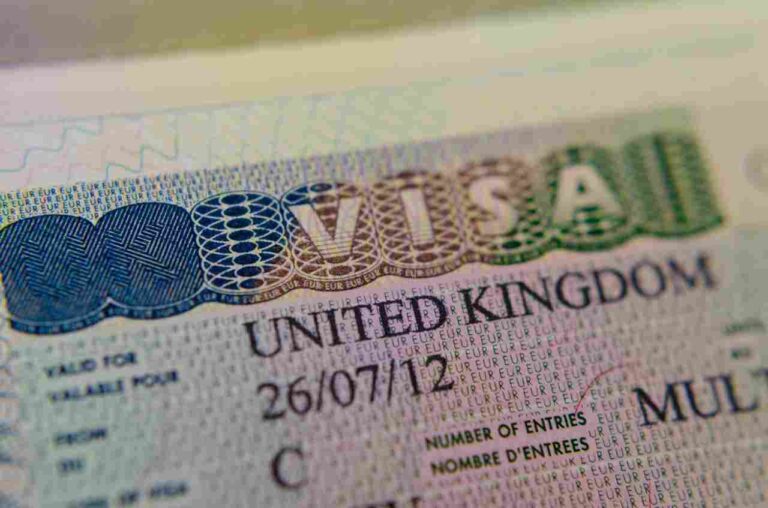
The question is almost always the same: “Which route is best for me?”
And the honest answer is that it depends, because “japa” is not one thing. Some people have a degree and a job offer. Some have a spouse already abroad. Some are students who want to study their way into permanent residency. Some have skills that specific countries are actively recruiting for right now.
The problem is that most of the information floating around Nigerian WhatsApp groups and YouTube comments treats every route like it applies to everyone. It does not. A route that works perfectly for a 27-year-old software engineer in Lagos might be completely wrong for a 30-year-old nurse in Imo or a pharmacist in Benin with a British spouse.
This article breaks down the 7 main legal routes Nigerians use to relocate abroad, what each one actually involves, who it suits, and what the honest catch is. Read through all of them before deciding which one to pursue.
Quick Summary
- There are 7 main legal routes: study, skilled worker visas, employer sponsorship, family/spousal reunification, investor/business visas, humanitarian pathways, and working holiday visas.
- No single route is universally best. The right one depends on your qualifications, finances, family situation, and target country.
- Most routes require a combination of documents, language scores, and money. Very few are quick or cheap.
- Countries actively recruiting Nigerians right now include Canada, the UK, Australia, Germany, and Ireland. Each has different requirements.
- Agents cannot create routes that do not exist. Learn the routes yourself so you know when someone is selling you fiction.
Route 1: Study Abroad, Then Stay
Best for: Recent graduates, early-career professionals, people who want a longer runway to settle in.
The study route is one of the most popular paths and for good reason. You get a student visa, complete a degree or postgraduate programme, then use the post-study work visa to get work experience, then convert to a skilled worker or permanent residency route.
The UK’s Graduate Route gives international students 2 years (3 for PhD graduates) to work after completing their degree. Canada’s Post-Graduation Work Permit (PGWP) can give up to 3 years. Australia has the Temporary Graduate visa (subclass 485). These post-study work rights are what make the study route genuinely strategic, not just about getting a degree.
The honest catch: studying abroad is expensive. Tuition fees for international students in the UK, Canada, and Australia are significantly higher than domestic rates. You also need to prove you have enough money to support yourself before they issue your visa. This route requires real financial planning, not just ambition.
Route 2: Skilled Worker Visa (Employer Sponsored)
Best for: Professionals with a job offer from a foreign employer in an eligible occupation.
This is the most direct route if you already have marketable skills. A foreign employer offers you a job, sponsors your visa, and you relocate on a work visa tied to that employment.
The UK Skilled Worker visa is the clearest example. Your employer must be a Home Office-approved sponsor, your role must meet a salary threshold, and the occupation must be on the eligible occupations list. Similar frameworks exist in Canada (through the Temporary Foreign Worker Program), Australia (the Employer Nomination Scheme), and Germany (the Skilled Immigration Act).
Healthcare workers, engineers, IT professionals, and tradespeople are in particularly high demand across these countries right now. If you are in any of those fields and have the qualifications and English scores to match, a direct job offer is not as far-fetched as it sounds.
The honest catch: getting the job offer is the hard part. You are competing globally, not just with other Nigerians. Your qualifications may also need to be assessed by a foreign regulatory body before you can even apply. That assessment process takes time and costs money.
Route 3: Points-Based Immigration (Express Entry and Similar Systems)
Best for: Skilled professionals who want to move without a prior job offer, especially to Canada or Australia.
Canada’s Express Entry system is the most well-known points-based immigration route. You create a profile, get scored on factors like age, education, work experience, and language ability, and if your score (called the Comprehensive Ranking System score, or CRS) is high enough, you get an Invitation to Apply (ITA) for permanent residency.
Australia has a similar system with SkillSelect and the General Skilled Migration stream. New Zealand also runs a points-based system.
The key difference between this route and Route 2 is that you do not need a job offer to enter the pool (though having one boosts your score significantly). You are essentially applying on the strength of your profile.
The honest catch: CRS score cutoffs for Canada have been high in recent years. Without a provincial nomination, many applicants sit in the pool for long periods without an invitation. Language scores (IELTS or CELPIP), credential assessments (like WES), and settlement funds are all required before you even create your profile. Do the preparation work honestly.
Route 4: Family and Spousal Reunification
Best for: Nigerians with a spouse, parent, sibling, or child who is already a citizen or permanent resident abroad.
If you have a close family member who is a citizen or permanent resident of another country, there may be a legal pathway for them to sponsor you. Spousal sponsorship is the most common version of this.
In Canada, a citizen or PR can sponsor their spouse or common-law partner. In the UK, a British citizen or settled person can sponsor their non-UK spouse on a Family visa. The US has the Family Preference immigrant visa system. Australia has Partner visas.
This route can lead directly to permanent residency in many cases, which makes it one of the most outcome-efficient paths if you qualify.
The honest catch: requirements are strict, processing times are long (sometimes years for some categories), and the financial bar is real. The sponsoring family member usually has to prove they can financially support you. Fraudulent sponsorship attempts are taken seriously. This is not a route to game.
Route 5: Working Holiday Visas
Best for: Young Nigerians (usually under 30 or 35) who want to live abroad for 1 to 2 years, earn money, and figure out the next step.
Several countries offer working holiday visas that allow young people to live and work for a limited period, typically 1 to 2 years. The UK’s Youth Mobility Scheme, Canada’s International Experience Canada (IEC), Ireland’s working holiday programme, and Australia’s Working Holiday visa (subclass 417/462) all fall into this category.
These visas are not a direct route to PR, but a lot of people use them as a stepping stone. You arrive, work, build savings, get local work experience, and then apply for a more permanent route with that experience now on your CV.
The honest catch: not all of these programmes are open to Nigerian passport holders. Eligibility depends on bilateral agreements between Nigeria and the destination country. Check the specific programme eligibility carefully before assuming you qualify. The UK’s Youth Mobility Scheme, for instance, has a nationality list, and Nigeria is not always on it. Verify directly.
Route 6: Business and Investor Visas
Best for: Entrepreneurs or high-net-worth individuals who want to set up or invest in a business abroad.
If you have significant capital or a genuine business plan, several countries have visa categories designed for investors and entrepreneurs. The UK had the Innovator Founder visa (replacing the older Tier 1 routes). Canada has the Start-Up Visa Program, which connects immigrant entrepreneurs with designated organisations. Portugal’s Golden Visa (now modified) and various other European routes exist for investors.
These pathways can lead to permanent residency and eventually citizenship, but the thresholds are high. The UK Innovator Founder visa requires endorsement from an approved body. Canada’s Start-Up Visa is competitive and takes time. Portugal’s changes have narrowed the investment options.
The honest catch: this route is for people with genuine business substance, not just money to move around. Immigration authorities look at the quality of the business concept and your ability to execute it, not just your bank balance.
Route 7: Humanitarian and Asylum Pathways
Best for: People who face genuine persecution or serious risk in Nigeria based on race, religion, nationality, political opinion, or membership of a particular social group.
This is the most misunderstood route in Nigerian japa conversations. Asylum is a legal protection for people who genuinely face persecution, not an alternative visa route for people who simply want to leave.
The process is long, uncertain, and difficult. Asylum seekers often live with significant restrictions on work and movement while their claims are processed. Rejection rates vary by country and by the nature of the claim. People who enter this route based on false or exaggerated claims face serious consequences, including deportation and future immigration bans.
This section exists because it is a legal pathway and deserves honest explanation, but it should not be pursued opportunistically. If you genuinely believe you qualify based on real circumstances, consult a qualified immigration lawyer, not a WhatsApp agent.
Choosing the Right Route
Emeka is 29, a physiotherapist from Anambra. He has 4 years of clinical experience, a BSc in Physiotherapy, and an IELTS score of 7.5. His colleague suggested the UK Skilled Worker route. His cousin in Canada said Express Entry is better.
Both are viable for him. But when he looked carefully, his physiotherapy credentials needed assessment by the Health and Care Professions Council (HCPC) for the UK route, a process that takes 3 to 5 months. For Canada, his WES assessment and CRS score calculation showed he would likely need a Provincial Nominee Program (PNP) nomination to get a competitive score.
He chose the UK route because the timeline was clearer for his profession and there were active NHS hiring programmes for international physios. That decision came from understanding both routes properly, not from guessing or trusting someone else’s experience wholesale.
Your situation is different from Emeka’s. Map your own qualifications against each route honestly.
Frequently Asked Questions
Which japa route is easiest for Nigerians right now? There is no universally easy route. The most accessible routes depend on your profession, qualifications, language scores, and finances. Healthcare workers have strong options in the UK and Canada. Tech professionals have options across multiple countries. The study route is accessible to more people but requires significant upfront money. “Easy” is relative to what you bring to the table.
Can I relocate abroad without a degree? Yes, some routes do not require a university degree. Skilled trades are in demand in Canada, Germany, and Australia. Some working holiday visas do not specify educational requirements. Employer sponsorship depends on the job, not always the degree. What matters is whether your skills and experience meet the requirements for the specific visa category you are targeting.
How long does it take to get PR after relocating abroad? It varies significantly by country and route. In Canada, some PR pathways can be completed in 6 to 12 months if your Express Entry CRS score is high enough. The UK typically requires 5 years on a qualifying visa before you can apply for Indefinite Leave to Remain (ILR). Australia’s timelines depend on the visa stream. Check the specific requirements for your target country and pathway.
Do I need an agent to apply for any of these visas? No. All of these visa categories can be applied for directly through the official government portals of the destination country. Agents can help organise documents and provide guidance, but they cannot do anything that you cannot do yourself with proper research. If an agent tells you they have “connections” inside an embassy or can guarantee a visa, that is a red flag.
What is the difference between a work permit and permanent residency? A work permit (or work visa) allows you to live and work in a country for a defined period. It is tied to conditions, sometimes to a specific employer. Permanent residency (PR) allows you to live and work in a country indefinitely without those restrictions, and it is usually the step before citizenship. Most work visa routes have a pathway to PR if you meet residency and other requirements over time.
The Next Step Is Research, Not a Decision
Reading this article is not the end of your japa planning. It is the beginning of doing it properly.
Most people pick a route based on what they hear other people talking about. The problem with that is your situation, your qualifications, your finances, your family setup, is unique. The route that worked for your colleague may require credentials or money you do not have yet, or it may take twice as long as you expected.
What you should do next:
- Identify 2 or 3 routes that seem to match your profile based on what you have read here.
- Go to the official immigration website for your target country and read the specific requirements for those routes.
- Use the tools and calculators on DeyWithMe to check your eligibility, estimate your costs, and understand your timeline before you commit.
The information is free. The planning is on you.