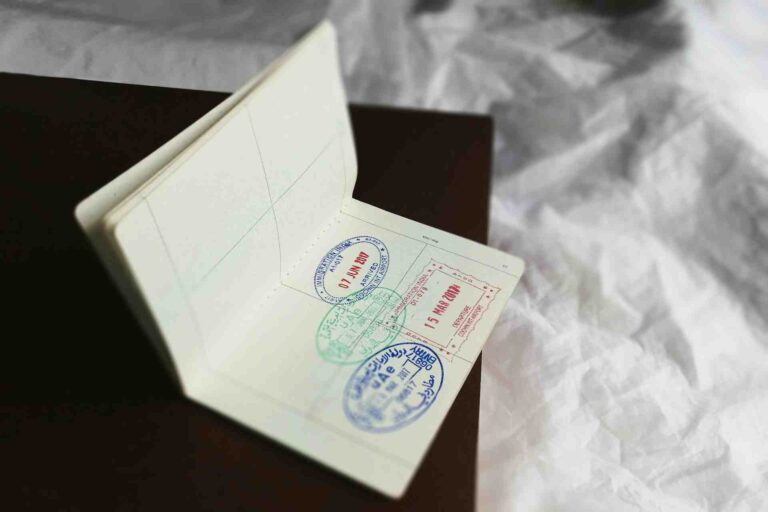
If you’ve been researching japa options and you’ve read the Canada, UK, or Australia guides, Japan is going to surprise you. The financial proof requirements work differently here, and applying the logic from other countries without adjusting for Japan is one of the most common mistakes Nigerian applicants make.
In most japa destinations, you gather your financial documents, submit them directly to the embassy or online visa portal, and wait. Japan doesn’t work that way.
In Japan, your school does most of the heavy lifting before you ever walk into a visa centre. The financial documents you prepare go to your school first. Your school assesses them, then submits them to the Japanese Immigration Services Agency as part of your COE application. Only after the COE is issued do you then apply for the actual visa sticker at the VFS centre in Lagos or Abuja.
Almost all of the work is focused on obtaining this COE. Getting the financial documents right at the school stage is therefore where your application is really won or lost.
Quick Summary
- Japan’s visa process is structurally different from UK, Canada, and Australia. Your school in Japan submits your financial evidence first, not you directly to an embassy.
- The Certificate of Eligibility (COE) is the most important document in the process. You cannot get your visa without it.
- Since March 2025, all Japan visa applications from Nigeria are processed exclusively through the Japan Visa Application Centres operated by VFS Global in Abuja and Lagos. You no longer apply directly at the embassy.
- There is no single official minimum POF figure published by the Japanese government. The amount your school expects is set partly by institution and partly by your course length.
- The biggest POF mistakes Nigerian applicants make come from not understanding how the COE process works, and from submitting the wrong type of financial document.
What the COE Is and Why It Runs the Whole Process
The Certificate of Eligibility (COE) is a pre-approval document issued by Japan’s Immigration Services Agency that confirms you meet the requirements to study in Japan. Without it, your visa application will likely be rejected.
Here’s the sequence:
- You apply and get accepted to a Japanese university, graduate school, vocational school, or language school
- You submit your financial documents to your school
- Your school applies for your COE on your behalf at the regional immigration bureau in Japan
- After 2 to 3 months, the COE is issued and sent to you
- You take your COE to the VFS Japan Visa Application Centre in Lagos or Abuja and apply for the visa
- The minimum processing time from submission of the visa application to collection of the passport is 12 working days for Abuja and 14 working days for Lagos
The practical implication is this: you need to have your financial documents ready before your school’s COE application deadline, not before your visa appointment. These are different dates, and the COE stage comes months earlier. Missing the financial document deadline at your school delays everything downstream.
The Proof of Funds Documents Japan Actually Requires
Unlike Canada or the UK, Japan does not publish a single government-mandated list of accepted POF documents that applies uniformly across all institutions. What your school requires will vary, but the standard financial documents across most Japanese institutions are:
1. A Bank Balance Certificate (Zandaka Shomei-sho)
This is the most critical financial document for Japan. It’s not a standard bank statement with transaction history. It’s a specific certificate issued by your bank that confirms the current balance in your account on a particular date. The certificate should be in English or Japanese. If it is in another language, attach an official translation.
To get this from a Nigerian bank, visit your branch and request a “bank balance certificate” or “account balance confirmation letter” on the bank’s official letterhead. Specify it’s for a Japanese student visa. Most major banks can issue this within one to three business days.
2. Income or Tax Certificate of the Guarantor
Required documents for financial proof include a savings balance certificate and an income certificate covering the past several years, or a taxation certificate of the person wishing to study in Japan or their guarantor.
If a parent is sponsoring you, their income documentation is not optional. For Nigerian parents in formal employment, a payslip and an employer letter confirming their salary and employment status will typically satisfy this. For self-employed parents, a business registration certificate and financial records are needed. The school needs to see that the sponsor genuinely earns enough to fund your studies.
3. A Letter of Financial Sponsorship
This letter, combined with proof of the guarantor’s income and employment, and proof of the relationship between you and the guarantor, form the core of the sponsorship package. The letter should be signed, dated, and state clearly who is being sponsored, for how long, and what costs are covered.
4. Proof of Relationship
If your parent or relative is the guarantor, attach your birth certificate. If it’s a sibling, attach both birth certificates. Relationship documentation is not optional for third-party sponsorship.
In principle, Japanese institutions do not accept credit card transactions, investment documents, or capital asset documents as financial evidence. Stick to the documents above.
The Minimum Amount: Why There’s No Single Number
This is where a lot of Nigerian applicants get confused. They search for “minimum proof of funds for Japan student visa” and find different figures on different sites. Some say ¥1.2 million, others say ¥1.6 million, others say ¥2 million. All of these are correct in different contexts, and none of them is an official government-published minimum.
While there’s no official minimum, you should demonstrate you can cover tuition plus living expenses for at least one year.
The figure your school expects will depend on:
- Your tuition fees for the first year
- Your estimated living costs based on the city you’ll be in (Tokyo is significantly more expensive than smaller cities)
- The school’s own assessment of what constitutes sufficient funds
Generally about ¥2,000,000 for one year of study is expected as a bank balance across many institutions, but your school’s admission documents will tell you what their specific threshold is. Ask them directly. Don’t rely on generalised figures from unrelated sources.
At current exchange rates, ¥2,000,000 is approximately ₦20 to ₦22 million. This is noticeably lower than what UK or Canada requires, but it’s still a significant sum, and the documentation standards are just as strict.
The Four Mistakes Nigerian Applicants Make Most Often
Mistake 1: Submitting a regular bank statement instead of a bank balance certificate
A standard printed bank statement showing months of transactions is not the same as a bank balance certificate. Japan primarily wants a balance certificate confirming the current amount on a specific date. Some institutions will accept a statement showing consistent balances over time, but your first document should always be the official certificate. Ask your bank specifically for this.
Mistake 2: Assuming the financial documents go to the embassy first
As explained above, the financial evidence goes to your school in Japan, not to VFS or the embassy. If you’re preparing your documents to submit at the Lagos VFS centre, you’ve already missed the step where it matters most. The COE stage, which is school-mediated, is where your finances are assessed.
Mistake 3: Making a large deposit just before printing the balance certificate
The stability of the funds is essential. A large transfer made just before requesting the certificate is a red flag. The money should have been in the account for at least several months. This is the same principle that applies everywhere, but it’s worth stating clearly because some people think Japan’s less prescriptive minimum means it’s also less strict about fund history. It’s not.
Mistake 4: Submitting documents only in English when Japanese is preferred
Some Nigerian banks issue documents in English by default. For most Japanese institutions, English is acceptable. But if any supporting document is in Yoruba, Igbo, or any other Nigerian language, you need to attach an official English translation. If your school specifically requests Japanese, you’ll need a certified translation. Don’t assume English-only works in all cases without confirming with your school first.
How the VFS Application Centre Actually Works for Nigerians
Once you have your COE in hand, here’s what the visa application stage looks like in Nigeria.
The Japan Visa Application Centres operate in Abuja at the 3rd Floor Sterling Bank Plaza, Plot 1083 Mohammedu Buhari Way, Central Business District, and in Lagos at First Floor, The Manor, Plot 110, Admiral Way, Lekki Phase 1.
Book your appointment online in advance. Appointments for visa applications can be booked up to three months in advance. Don’t show up without an appointment expecting to be served.
At the VFS centre, you’ll submit your visa application form, passport, photographs, your COE (original or electronic copy is accepted), and any additional documents the embassy requests. The financial documents at this stage are secondary because your school has already assessed and submitted them for the COE. However, the VFS officer or the embassy can still request additional financial evidence, so bring your bank balance certificate and sponsor documents with you.
There is a service charge applied per application on top of the standard visa fees. For applications made in Lagos, a separate courier fee is also charged for the transfer of documents between the Lagos and Abuja centres. Budget for this when planning your application costs.
A Practical Example: Emeka’s Japan Application
Emeka, a 26-year-old software developer from Enugu, got accepted to a two-year graduate programme at a Japanese university in Osaka. His tuition is ¥1.5 million per year. The school told him he needed to demonstrate at least ¥2.5 million in available funds for the first year (tuition plus living costs).
His father runs a pharmacy in Enugu and agreed to sponsor him. Here’s what they put together:
- A bank balance certificate from First Bank showing ¥2.8 million equivalent in naira (with a small buffer above the requirement)
- An income certificate showing the pharmacy’s annual revenue, supported by a business registration from the Corporate Affairs Commission
- A signed sponsorship letter from his father stating the amount, the duration of sponsorship, and the purpose
- Emeka’s birth certificate proving the father-son relationship
He submitted all of this to his university in Japan by the deadline they specified. The university submitted the COE application to the immigration bureau. Ten weeks later, his COE arrived. He then booked his VFS appointment in Lagos, submitted his visa documents, and received his visa 14 working days later.
The entire process from sending documents to his school to holding a visa took about four months. He started preparing his financial documents three months before his school’s deadline, giving himself adequate time to build his bank balance and gather his father’s documents properly.
FAQ
Do I need to go to the Japan Embassy in Abuja directly for my student visa application?
No. Since March 2025, all visa applications from Nigeria are processed exclusively at the Japan Visa Application Centres operated by VFS Global in Abuja and Lagos, with very limited exceptions for urgent humanitarian cases, diplomatic business, and government-invited applicants. Book your appointment at the VFS centre in whichever city is closer to you.
Can I apply for a Japan student visa without a COE?
Technically possible in very limited circumstances, but practically speaking, you should not attempt it. The Embassy of Japan highly recommends obtaining a COE before applying for a visa. Without a COE, your application is extremely unlikely to succeed, and the COE process requires going through your Japanese school first.
How much yen do I need to show for a Japan student visa?
There is no single official government minimum. A common benchmark across many institutions is around ¥2,000,000 for one year, but this varies by school and city. Ask your specific Japanese institution what their financial threshold is. Do not plan your savings based on a figure you read on a random blog without confirming it with your school.
Can I use a Nigerian bank statement in naira as my financial proof?
Yes, foreign currency is acceptable for self-sponsored applicants, provided it is supported by official bank documentation. Your naira balance will need to clearly convert to the required yen amount at the applicable rate. Present the bank balance certificate in naira alongside a currency conversion note or use a bank that issues dual-currency statements. Confirm with your specific school what format they prefer.
How early should I start the Japan student visa process?
It is highly recommended to apply for your COE through your chosen institution 4 to 6 months before your intended programme start date. Since the COE alone takes 2 to 3 months to process, and you need your financial documents ready before your school’s submission deadline, start preparing your POF at least 6 to 9 months before you want to arrive in Japan.
Japan Is Achievable, But the Process Rewards Early Starters
Japan’s visa process has more moving parts than most people expect. The school-mediated COE stage, the specific financial document types, and the new VFS application centres in Lagos and Abuja are all things you need to understand before you start.
The good news is that the financial threshold, while serious, is more accessible than UK or Canada for many Nigerian applicants. What trips people up is not the money, it’s getting the right documents in the right format to the right place at the right time.
Use the DeyWithMe Financial Proof Calculator to estimate your Japan POF target in naira terms and plan your savings timeline. Then contact your Japanese institution early, ask for their specific financial document requirements, and start building toward that number six months before their deadline.