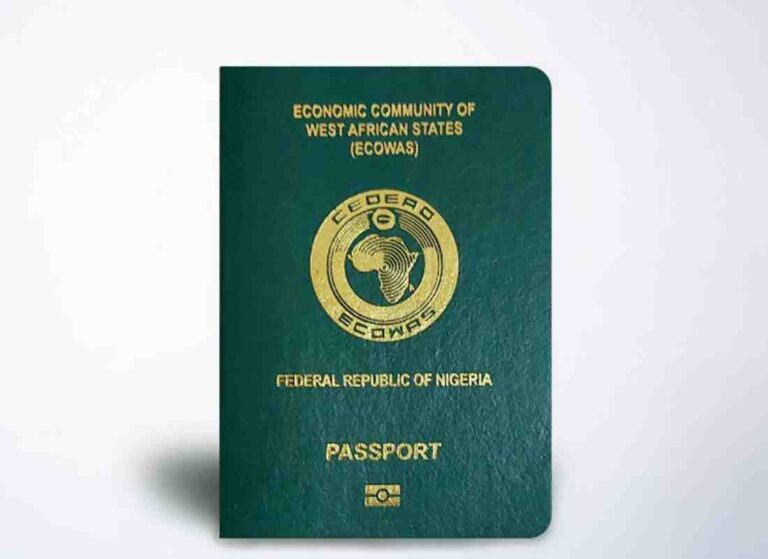
The gap between “I want to japa” and “I am on a plane” is not mainly a money problem. It is a sequencing problem.
Most people have a general sense of what needs to happen. Get IELTS. Get documents. Save money. Apply for visa. Travel. But they do not know in what order these things should happen, how long each one takes, or what depends on what. So they do things out of order, circle back, discover they needed something months ago that they have not started, and either delay or submit a weaker application than they should have.
A 12-month plan solves the sequencing problem. It tells you what to do in month one versus month six versus month eleven, and why the order matters. It does not tell you everything will go perfectly. Nigeria does not work that way. But it gives you enough lead time on every step that when something takes longer than expected, which it will, the whole plan does not collapse.
This is that plan. It is written as a general framework because the specific steps vary by route and destination. Where it says “check official requirements,” that means your specific route, not immigration requirements generally.
Quick Summary
- A realistic 12-month japa plan has four phases: Route and Savings (months 1 to 3), Preparation and Documents (months 4 to 6), Application (months 7 to 9), and Pre-Departure (months 10 to 12).
- The steps that take longest, IELTS preparation, credential assessment, bank statement seasoning, document authentication, need to start earliest. They cannot be compressed.
- This plan assumes you are starting from zero with a general intention to japa but no specific route confirmed yet. If you already have a route or a job offer, some steps can be accelerated.
- 12 months is achievable for most Nigerian adults in formal employment with the right income level. Some routes require longer. Be honest about your timeline rather than rushing.
- Every official fee, requirement, and processing time in this plan should be verified on the relevant immigration authority’s website before you act on it.
Phase 1: Route and Savings (Months 1 to 3)
This is the foundation phase. Nothing else that follows can be done well without clarity on these two things: where you are going and how you are funding it.
Month 1: Choose Your Route
Not your country. Your route. Canada is not a route. Express Entry to Canadian PR is a route. UK is not a route. UK Skilled Worker Visa sponsored by an NHS trust is a route.
Your route is the specific legal pathway that applies to your qualifications, your profession, your financial position, and your timeline. The route determines which documents you need, which tests you need to take, what the financial requirements are, and how long the process takes.
- [ ] Research the 3 to 4 routes that might realistically apply to your profile
- [ ] Check your eligibility for each route on the official immigration portal of the destination country
- [ ] Select your primary route and a backup route
- [ ] Read the full official requirements for your chosen route end to end, not a summary, the actual official requirements
If this step reveals that you do not currently qualify for your preferred route (wrong salary, missing credential assessment, IELTS not yet done), use month 1 to identify exactly what gap needs to close and by when.
Month 2: Calculate Your Real Savings Target
Now that you have a route, you can calculate what it will actually cost.
- [ ] List every cost category: preparation (IELTS, credential assessment, document authentication, PCC), visa fees, immigration health surcharge (for UK) or settlement funds (for Canada), flights, accommodation deposit, and 3 to 6 months of living costs in your destination city
- [ ] Research each cost in destination currency using official sources
- [ ] Convert to naira at the current exchange rate, not last year’s rate
- [ ] Add 15 percent buffer for unexpected costs
- [ ] That total is your savings target
Write the number down. Pin it somewhere you see it regularly.
Month 3: Set Up Your Financial Infrastructure
- [ ] Open a dedicated savings account labeled specifically for your japa fund if you do not already have one
- [ ] Open a domiciliary account (USD or GBP) if your route involves costs in foreign currency
- [ ] Set up an automated monthly transfer of your japa savings contribution on the day your salary arrives
- [ ] Build a 2-month emergency fund in a separate account to protect your japa savings from disruptions
- [ ] Begin saving consistently from this month. Month 3 is month 1 of your bank statement history
The bank statement point is not a minor detail. Many visa applications require 3 to 6 months of bank statements showing consistent, genuine savings. Month 3 is when that clock starts.
Phase 2: Preparation and Documents (Months 4 to 6)
This is the most active phase. Most of the legwork happens here.
Month 4: Language Tests and Credential Assessment
- [ ] Register for IELTS. If you are applying for a UK visa, confirm whether you need standard IELTS Academic or IELTS UKVI Academic. These are different tests. Book at British Council Nigeria or IDP Nigeria.
- [ ] Begin IELTS preparation if you have not already. Aim to sit the test by month 5 at the latest, to allow for a resit if needed.
- [ ] If your route requires credential assessment (WES for Canada, HCPC for UK allied health, NMC for nursing, GMC for medicine), begin that application now. These processes take 3 to 5 months. Starting in month 4 means you have results by month 7 to 8.
- [ ] Check current fees and processing times on the relevant body’s official website before estimating your timeline.
Month 5: Police Clearance Certificate and Document Authentication
- [ ] Apply for your Police Clearance Certificate (PCC) from the Force Criminal Investigation Department (FCID) in Abuja. Budget 3 to 6 weeks minimum for processing.
- [ ] Gather documents that need authentication: birth certificate, educational certificates, marriage certificate if relevant.
- [ ] Submit documents to the Federal Ministry of Foreign Affairs (FOMFA) for authentication and apostille. Budget 2 to 4 weeks.
- [ ] Request official sealed transcripts from your Nigerian university. Contact them early because some universities take weeks or months.
- [ ] Check your passport expiry. If it has less than 12 months validity remaining, apply for renewal through NIS now.
Month 6: Document Audit and Consistency Check
- [ ] Lay out every document you plan to submit and compare names, dates of birth, and other key identifiers across all documents
- [ ] Flag any inconsistencies between your passport name and other documents
- [ ] Obtain sworn affidavits for any name variations that need to be formally explained
- [ ] Confirm your IELTS results have arrived and meet the requirement for your route
- [ ] Check whether your credential assessment is on track for completion by month 8
This is also the month to check your savings balance against your target. Are you on track? If you are behind, identify specifically what needs to change in the next 3 months.
Phase 3: Application (Months 7 to 9)
This is where everything comes together. Do not enter this phase with outstanding preparation items.
Month 7: Pre-Application Checklist
Before you submit anything:
- [ ] All mandatory documents are assembled, authenticated, and consistent
- [ ] Your bank statements show the required period of savings (minimum 3 months, ideally 6)
- [ ] Your credential assessment is complete or has a confirmed completion date before your application deadline
- [ ] Your IELTS score meets the requirement for your specific visa type
- [ ] You have confirmed the current visa fee and any associated charges on the official government website
- [ ] You have confirmed the current proof of funds requirement on the official website
- [ ] You have read the complete official application requirements for your visa one more time
Month 8: Submit Your Application
- [ ] Complete your visa application form on the official government portal. For UK visas, this is gov.uk. For Canada, this is ircc.canada.ca. For Australia, this is immi.homeaffairs.gov.au.
- [ ] Pay the required fees. Keep confirmation receipts.
- [ ] Book your biometrics appointment at the relevant Visa Application Centre in Nigeria (Lagos or Abuja)
- [ ] Attend your biometrics appointment
For routes that include an interview (primarily US visas, some Schengen visas), prepare for the interview using DeyWithMe’s interview preparation guides. Know your application thoroughly. Practise answering common questions out loud.
Month 9: Active Waiting and Follow-Up
- [ ] Track your application status through the official portal
- [ ] Respond promptly to any requests for additional documents. Delays in responding extend processing time.
- [ ] Do not chase the application by calling or emailing repeatedly. It does not speed things up.
- [ ] Use this period to begin pre-departure planning, particularly research into accommodation in your destination city
Standard processing times vary by country and application type. UK standard processing is typically around 3 weeks but varies. Canadian processing can range from 8 to 20 weeks depending on the route and current volumes. Check current processing times on the official portal at the time you apply.
Phase 4: Pre-Departure (Months 10 to 12)
Your visa has been approved. The work is not done.
Month 10: Housing and Financial Setup
- [ ] Confirm your accommodation for at least the first month in your destination city. Do not arrive without somewhere confirmed to go.
- [ ] Research how to open a bank account as a new arrival in your destination country. In the UK, Monzo and Starling allow account opening before you have a fixed address. In Canada, some major banks offer pre-arrival account opening.
- [ ] Set up Wise or another regulated international money transfer service so you can send and receive money between Nigeria and abroad from day one
- [ ] Notify your Nigerian bank that you are relocating internationally
Month 11: Documents, Health, and Personal Affairs
- [ ] Digitise every important document and back up to cloud storage you can access from anywhere
- [ ] Make 2 sets of certified physical copies of your passport, visa, and key certificates. Leave one set with a trusted family member in Nigeria.
- [ ] Have a full medical and dental check. Carry a 3 to 6 month supply of any regular medication with the generic (international) drug name written by your Nigerian doctor.
- [ ] Brief a trusted family member to manage any Nigerian affairs in your absence. Consider a formal power of attorney if needed for property or financial matters.
- [ ] Sort any Nigerian property, vehicle, or asset arrangements before you leave.
Month 12: Final Preparations and Departure
- [ ] Book your flight. Buy early for better prices but confirm after your visa is approved and you have a firm start date.
- [ ] Download offline maps, your bank app, transit apps, and any essential apps for your destination city before you leave.
- [ ] Join Nigerian community groups in your destination city on Facebook or Reddit. Get on-the-ground information from people already there.
- [ ] Check your passport, visa vignette, and all travel documents one final time for accuracy.
- [ ] Travel.
Following the Japa Plan
Adaeze is 27, a physiotherapist from Anambra with 4 years of clinical experience. Her target is the UK Skilled Worker visa. She starts her 12-month plan in January.
January to March: She researches routes, confirms her occupation is on the UK eligible occupations list, calculates a savings target of approximately 12 million naira, opens a savings account and domiciliary account, starts depositing consistently.
April to June: She sits IELTS UKVI Academic and scores 7.0. She begins her HCPC registration application. She gets her PCC from FCID Abuja and sends her degree certificate for FOMFA authentication. She catches a name variation between her passport and NYSC certificate and gets a sworn affidavit.
July to September: Her HCPC registration is confirmed. She receives a job offer from an NHS Trust, obtains her CAS equivalent documentation, and submits her Skilled Worker visa application online. She attends her UKVCAS biometrics appointment in Lagos.
October: Visa approved.
November to December: She confirms her accommodation in Manchester, opens a Starling Bank account, arranges power of attorney for her brother to manage her Anambra property, gets a 4-month supply of her medication, and prepares to travel.
She arrives in Manchester in January, exactly 12 months after she started her plan.
Frequently Asked Questions
Is 12 months realistic for every japa route? It depends on the route and your starting point. For the UK Skilled Worker route with an employer actively recruiting, 12 months is achievable. For Canada Express Entry without a provincial nomination, the timeline from profile creation to PR can run 12 to 24 months depending on your CRS score. For routes involving credential assessment from scratch, the assessment alone can take 3 to 5 months, which can push total preparation closer to 18 months. Be honest about your specific route’s realistic timeline.
What if I am starting with less than 12 months before my target date? Identify which steps have the longest lead times, typically credential assessment, bank statement seasoning, and document authentication, and start those immediately, even before the other steps are clear. Compress what can be compressed. Accept that some steps may need to overlap. Be realistic about whether your target date is achievable or whether you should target the next intake or application window.
What happens if my visa is refused mid-plan? Read the refusal letter carefully. Understand the specific reason. Address it directly before reapplying. A refused application is not the end of the plan; it is a setback that adds time. Most refusal reasons are fixable with the right response. Do not reapply with the same application that was refused.
Do I need to follow every step in this plan in order? Some steps are sequentially dependent (you cannot apply for a visa before you have IELTS results and authenticated documents). Others can run in parallel (savings build while you are taking IELTS and processing documents). The phase structure is a guide, not a rigid rule. The key principle is to start the longest-lead-time items earliest and not to submit an application before all required elements are complete.
Start Month 1 Today, Not Next Month
Every month you delay starting this plan is a month added to your departure date. The plan does not require you to have everything figured out before you begin. Month 1 is specifically designed for figuring things out.
Pick up your phone or laptop right now and do one thing: go to the official immigration website of your target country and read the requirements for the specific route you are most interested in. That single action is month 1, day 1 of your 12-month plan.
DeyWithMe has route-specific guides, document checklists, savings calculators, and eligibility tools for the UK, Canada, and Australia pathways. Use them to fill in the specific details for your situation at each stage of this timeline.
The plan works. The only question is when you start it.