The Complete Japa Document Checklist for Nigerians
The number one reason Nigerians get visa rejected isn’t money or qualifications — it’s missing or inconsistent documents. Here’s everything you actually need, broken down by country and purpose.
- Why documents kill most japa plans
- Universal documents every Nigerian needs
- Documents by purpose — study, work, PR, family
- Country-specific requirements at a glance
- Real scenario: Lagos applicant, UK student visa
- 7 document mistakes Nigerians make (and how to avoid them)
- Master checklist before you apply
- Expert tips that agents won’t tell you
- FAQs
Why Documents Kill Most Japa Plans
You’ve probably seen it on Nairaland or heard it from someone in your office — “I had everything ready but they still rejected me.” A lot of the time, it’s not that the person wasn’t qualified. It’s that their documents told a story the visa officer didn’t believe.
This matters a lot for Nigerians specifically. Embassies know Nigeria has a significant overstay rate. They scrutinize Nigerian applications more closely than applications from, say, Germany or Japan. So your documents need to be airtight — internally consistent, properly verified, and clearly organized.
The japa document checklist isn’t just about having the right papers. It’s about those papers saying the same thing, in a coherent story, about who you are and what your plans are.
Universal Documents Every Nigerian Needs
Before you even think about which country or which visa category, there are base documents that show up in every single application. Get these sorted first.
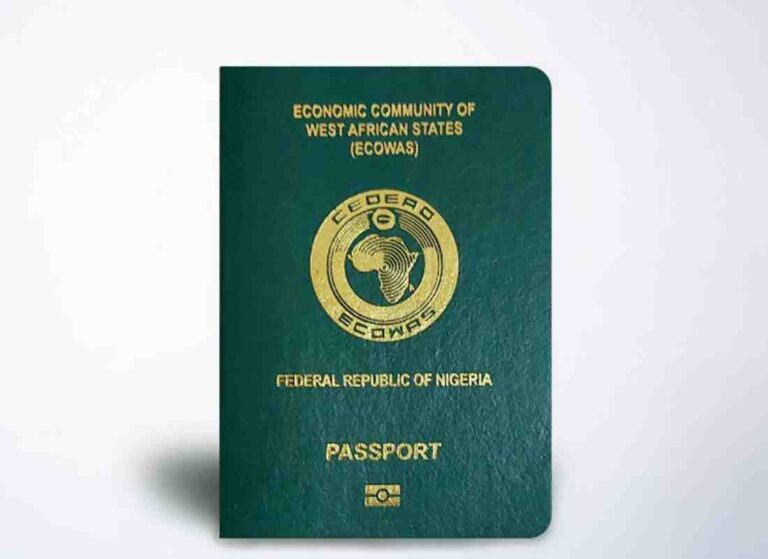
1. International Passport
This one is obvious but people still get it wrong. Your passport needs to be valid for at least six months beyond your intended travel date — but most countries want more. For long-term visas (student, work, PR), you want at least 12–18 months of validity remaining. If yours is expiring soon, renew it first.
Also, old passports matter. If you’ve travelled before or had previous visas, keep your old passport. Embassies want to see your travel history. A clean visa record (no overstays, no rejections) is an asset.
2. National ID / NIN Document
Your NIN (National Identification Number) slip or NIN-linked document is increasingly required for Nigerian document processes — from police clearance to bank verification. Make sure it’s properly linked and accessible. Some countries also ask for your national ID as a supplementary identity document.
3. Birth Certificate
Your original birth certificate from the National Population Commission (NPC). Not a hospital birth certificate — though you may need that too for some purposes. The NPC one is the legally recognized document. If you don’t have it, you can get one from the NPC offices. This takes time, so start early.
4. Police Clearance Certificate (PCC)
Almost every country requires this. In Nigeria, it comes from the Nigeria Police Force headquarters in Abuja, issued through the Criminal Records Registry. The process: you apply, get fingerprinted, pay the fee, and wait. It typically takes 2–6 weeks, but can be longer.
Important — some countries (Canada, for example) want the PCC to be not older than six months at the time you use it. So don’t apply for it too early and then let it expire before your visa is ready.
5. Bank Statements
This is where a lot of people struggle. Embassies want to see that you can actually fund your stay abroad. What they’re looking for: a consistent balance over 3–6 months, not a sudden large deposit right before you apply. More on this in the mistakes section.
Statements should be printed on the bank’s letterhead and stamped — not just a PDF you downloaded from your banking app. Some applications require statements to be accompanied by a bank reference letter.
6. Photographs
Passport-size photos meeting the specific embassy’s requirements. Each country has slightly different specs — background color, size, whether glasses are allowed, face framing. Check the specific embassy website. Don’t reuse photos from a different application.
Documents by Purpose
For Study Abroad (Student Visas)
- Admission/Offer letter from the university or institution — unconditional preferred
- Academic transcripts and certificates — WAEC, NECO, undergraduate degree (if postgraduate), notarized or authenticated
- Statement of Purpose (SOP) — a personal statement explaining why you’re going and what you plan to do after
- Proof of funds — tuition + living expenses for the full duration or at least year one
- IELTS/TOEFL certificate — most English-speaking countries require this for non-native speakers (though some universities exempt Nigerian applicants)
- Sponsor’s documents — if someone is funding you, their bank statements, employment letter, tax records, and a sponsorship letter
- UCAS or WES evaluation (for Canada, some US schools, and UK if required) — credential evaluation service that converts Nigerian qualifications to local equivalents
For Work (Skilled Worker / Employment Visas)
- Job offer letter from a licensed employer in the destination country
- Certificate of Sponsorship or equivalent (UK, Canada, etc.) — the employer-side document confirming your role
- Professional qualifications and certificates — relevant to your job, authenticated
- Employment history — letters from previous employers, updated CV
- Degree certificates — WES or local equivalent evaluation may be needed
- IELTS/language test — usually required
- Medical examination results — from an approved panel physician
For Permanent Residence (PR)
- All of the above, plus typically:
- Proof of continuous residence or employment in the destination country (if applying from within)
- Tax records and contributions
- Character references
- Proof of integration — language test scores, community involvement (varies by country)
- Marriage certificate if applying with a spouse
For Family Migration / Spousal Visas
- Marriage certificate — from the Nigerian Registry of Marriages, authenticated
- Proof of relationship — photos, chat history, call records, joint finances (yes, they ask for this)
- Sponsor’s documents — proof that the person already abroad meets the income threshold
- Children’s birth certificates (if applicable)
- Proof of communication — this is more required for countries like the UK that want evidence the relationship is genuine
Country-Specific Requirements at a Glance
Different countries emphasize different things. Here’s a quick reference:
| Country | Key extra requirements | Notable for Nigerians |
|---|---|---|
| UK | TB test from an approved clinic in Nigeria (mandatory), ATAS certificate for some STEM courses | Very document-heavy. Credibility interviews for student visas happen occasionally |
| Canada | Biometrics, ECA (WES credential evaluation), IRCC-approved medical exam | Express Entry is points-based — your documents must match your profile claims exactly |
| USA | DS-160 form, SEVIS fee receipt (for F-1), DS-2019 (for J-1) | Interview-heavy. Strong ties to Nigeria (property, family, employment) are critical |
| Germany | Blocked account (Sperrkonto) for students, APS certificate for Nigerian applicants | German is useful even for English-taught programs. APS vetting can be strict |
| UAE | Attestation through the Nigerian Ministry of Foreign Affairs and UAE Embassy | Document attestation chain is critical and specific — one wrong step invalidates everything |
| Australia | Skills assessment from the relevant body (e.g., Engineers Australia), health insurance (OSHC) | Genuine Temporary Entrant (GTE) statement is key — must convincingly show intention to return |
Adaobi, a 26-year-old pharmacist from Enugu, applied for a UK student visa for a one-year master’s program in Health Economics at the University of Nottingham.
She had her admission letter, IELTS score (7.0), and a bank statement showing ₦18 million in her account. The visa officer rejected her application — the reason given was “not satisfied that funds are genuine.”
What went wrong? ₦12 million of that balance had landed in her account 3 weeks before application — a family contribution deposited in one shot. The UKVI (UK Visa and Immigration) flagged this as a “cash dump.” The money wasn’t necessarily fake, but the sudden spike without any explanation looked suspicious.
The lesson: For UK student visas, funds must ideally be in your account (or your sponsor’s) for at least 28 consecutive days before the application date. Large sudden deposits without a paper trail explaining the source are a red flag. A simple letter from the sender explaining the transfer, along with their own bank statement, can solve this — but Adaobi didn’t include it.
7 Document Mistakes Nigerians Make (And Why They Cause Rejections)
-
Sudden bank deposits (cash dumping)
Dropping a large sum in your account days before applying is one of the most common reasons Nigerians get rejected. Visa officers are trained to spot it. Your balance needs a credible history, not just a current number. Start building your statement months before you plan to apply. -
Inconsistent information across documents
Your name on your passport, NIN, academic certificates, and bank statements must match — exactly. Emmanuel Chukwuemeka on one document and Chukwuemeka Emmanuel on another is a problem. Middle names missing on one certificate but present on another? Flag. Fix inconsistencies before you apply. -
Weak or vague Statement of Purpose
The SOP isn’t a cover letter. It should clearly explain why this program, why this country, and why now — and crucially, why you’ll come back (or why your profile makes you a legitimate immigrant). Generic, template-filled SOPs are easy for officers to spot. -
Unverified academic documents
A degree certificate you printed yourself or had “processed” by a Lagos agent without proper verification will fail. Academic documents often need attestation from NYSC, the issuing institution, or a service like WES. Don’t cut corners here. -
Wrong visa category
Applying for a visitor visa when your actual intention is to study or work — hoping to sort things out when you land — is visa fraud. It will get you rejected and potentially flagged. Apply for the correct category from the start, even if the process is longer. -
Using agents who “guarantee” visas
No legitimate agent guarantees a visa. Visa decisions are made by foreign governments, not local agents. Agents who promise 100% success are often forging documents or submitting fraudulent applications — putting your future visa record at serious risk. Vetting agents matters. -
Expired or mis-sequenced documents
PCC issued more than 6 months ago, bank statements that are 4 months old when 3 months is the requirement, IELTS that expired before your visa was approved. Dates matter. Build a document validity calendar and check it before submission.
Master Checklist Before You Apply
Go through this before submitting any visa application. Not all items will apply to every country or visa type — but treat this as your comprehensive pre-flight check.
- International passport — valid for 12+ months beyond travel date
- Old passport(s) with previous visas and travel history
- National ID / NIN slip
- Birth certificate (NPC-issued)
- Police Clearance Certificate (not older than 6 months)
- Passport photographs (per destination country specs)
- Marriage certificate (if applicable)
- Personal bank statements (last 3–6 months, stamped and signed)
- Bank reference letter
- Sponsor’s bank statements (if applicable)
- Sponsor’s employment letter or business registration
- Sponsorship letter (signed, clearly stating the amount and purpose)
- Evidence of source of funds (e.g., business income, property sale, inheritance)
- Tax clearance certificate (some countries require this)
- WAEC / NECO / NABTEB certificates
- University degree certificate(s)
- Academic transcripts (from each institution)
- NYSC discharge or exemption certificate
- WES or credential evaluation (where required)
- Professional certifications relevant to your field
- IELTS / TOEFL / language test results
- Offer letter from employer (if work visa)
- Certificate of Sponsorship or equivalent
- University admission / offer letter (if student visa)
- Statement of Purpose
- Medical examination results (from approved panel physician)
- TB test certificate (required for UK visas)
- Country-specific forms (DS-160 for USA, APS certificate for Germany, etc.)
Expert Tips That Agents Won’t Tell You
Frequently Asked Questions
Not always. Some UK universities exempt Nigerians (since English is our medium of instruction), but this is increasingly less common. Canada and Australia generally require IELTS or an equivalent (like PTE or CELPIP) for most visa categories. Germany and the UAE may waive it for English-taught programs. Check the specific program and visa requirements — don’t assume.
It depends on the country and visa type. UK student visas require funds covering tuition for year one plus £1,334/month for living expenses (up to 9 months). Canada’s study permit requires proof of CAD $20,635 per year plus tuition. Germany wants a blocked account with at least €11,208 per year. For work visas, the employer’s sponsorship often covers this, but always confirm the specific threshold from the official immigration website.
Yes, in most cases. A parent, sibling, or spouse can sponsor you. They’ll need to provide their own bank statements, employment or business records, a sponsorship letter, and sometimes proof of their relationship to you. The sponsor’s financial picture needs to be strong enough to cover your trip without jeopardizing their own finances.
The top reasons are: insufficient or suspicious proof of funds, failure to demonstrate strong ties to Nigeria (i.e., they believe you’ll overstay), inconsistent documents, weak SOPs, and applying in the wrong visa category. Previous rejection history also hurts future applications, which is why getting it right the first time matters a lot.
It can be. Name inconsistencies are one of the most common problems for Nigerian applicants because of how names get recorded differently across government systems over decades. You’ll typically need a statutory declaration (sworn affidavit) or a deed poll name change document explaining the discrepancy. Some countries are stricter about this than others — the UK and Canada will flag it.
Attestation is a chain of official verification — the Nigerian government confirms the document is genuine before the destination country accepts it. For most countries, this means getting documents verified by the Federal Ministry of Education or Ministry of Foreign Affairs, then the destination country’s embassy in Nigeria, and sometimes a notary public as well. The UAE has a particularly strict attestation process — one missed step and the whole chain is invalid.
Yes — previous rejection doesn’t ban you from applying again. But you must disclose it on your new application (hiding it is a much bigger problem than the rejection itself). Your new application should address whatever caused the previous rejection. If it was weak finances, show stronger finances now. If it was a documentation issue, fix the documentation. A rejection is not permanent — but it does raise the bar for your next application.
WAEC Nigeria allows you to verify and reprint results through their e-portal (waecdirect.org). You’ll need your exam number and year. If you need a certified copy (for verification by a foreign institution or WES), WAEC can issue a result verification letter directly to the requesting institution — this is more credible for immigration purposes anyway.
The Bottom Line
Japa is a serious commitment — and the document process is where it either starts right or falls apart. A lot of people treat documents as an afterthought, something to scramble together once they’ve decided to apply. The ones who get through tend to start earlier, keep cleaner financial records, and tell a consistent, believable story across every piece of paper.
You don’t need to be rich or have a foreign connection to get a visa. You need organized, verifiable documents that answer every question a visa officer is likely to ask — before they ask it.
Start building your paper trail now. Not when you find a school or a job offer — now. Because the best time to start sorting your bank statements and getting your PCC was three months ago. The second best time is today.
Use the calculators and tools on DeyWithMe.com to estimate proof of funds requirements, check visa timelines, and plan your japa budget — built specifically for Nigerians.