It’s 5am. Your flight is at 9am. You’re moving around your room trying to pack the last few things when you suddenly can’t remember if you printed your visa approval letter. You’re fairly sure it’s on your phone but you’re not sure if the airline accepts digital copies. Your boarding pass is somewhere in your email. Your carry-on is bulging. You haven’t checked your bag weight.
You leave the house at 6:30am hoping traffic is light. It isn’t.
This scenario, or some version of it, is how a huge number of first-time travellers from Nigeria start their airport morning. Everything gets done eventually, but at the cost of anxiety, rushing, and the kind of scattered energy that makes the whole day harder than it needs to be.
The fix is simple. Do the preparation the night before. Use this checklist as your guide, both for the evening before your flight and for the morning itself.
Quick Summary
- Everything that goes wrong on travel day was almost always fixable the night before. This checklist exists so you don’t find that out the hard way.
- Your travel documents, passport, visa, boarding pass, and supporting paperwork, should be gathered and confirmed the evening before, not the morning of.
- Liquids in your carry-on must be in containers of 100ml or less, packed in one clear resealable bag. Sort this before you pack, not at the security queue.
- Have some local currency or USD ready before you leave home. Don’t rely on airport exchange rates or finding a working ATM under pressure.
- Give yourself more time than you think you need. Lagos traffic has ended more japa journeys at the airport than any visa refusal.
Section 1: Travel Documents
These are the non-negotiables. If any of these are missing or wrong, you may not be able to board or enter your destination.
- [ ] Passport confirmed valid. Check the expiry date right now, not at the airport. Most countries require at least 6 months of validity beyond your travel date. If it expires in the next 6 months, you have a problem that needs to be solved before you travel.
- [ ] Visa or entry document printed. If you have an e-visa, visa approval letter, or any entry document issued as a PDF, print it. Don’t rely solely on your phone screen. Airline check-in staff and immigration officers sometimes require a physical copy. Print two copies and keep them in separate places.
- [ ] Boarding pass printed or downloaded offline. Complete your online check-in as soon as it opens (usually 24 to 48 hours before departure) and download your boarding pass to your phone. Then print a physical copy. If your phone battery dies or the airline’s app has issues, the printout is your backup.
- [ ] Hotel booking or accommodation confirmation saved and printed. Immigration officers at your destination may ask where you’re staying. Have the address and booking reference accessible without needing WiFi.
- [ ] Return or onward travel confirmation accessible. Some immigration officers ask to see proof that you’re leaving the country. Your return ticket or next flight booking serves this purpose. Have it ready.
- [ ] Yellow fever card located and packed. If you’re flying internationally and your destination or any transit country requires proof of yellow fever vaccination, your International Certificate of Vaccination (the yellow card) must travel with you. Many Nigerian travellers have had boarding denied for forgetting this.
- [ ] Travel insurance policy details saved. Your policy number and the insurer’s emergency contact line should be saved somewhere accessible offline. You won’t need it until you really need it, and then you’ll need it fast.
- [ ] Digital copies of all documents backed up. Send photos or PDFs of your passport, visa, boarding pass, accommodation booking, and any other key documents to your email or save them in Google Drive. If your bag is stolen or your documents are lost, these digital copies are what help officials verify who you are.
Section 2: Money and Cards
Financial preparation is one of the areas where first-time travellers lose the most money through avoidable mistakes.
- [ ] Small amount of local currency or USD ready. Airport exchange rates are poor. Have enough foreign currency to cover immediate transport from the airport to your accommodation and one meal, roughly the equivalent of $30 to $50 depending on your destination. Exchange the rest in the city at a better rate.
- [ ] Debit card international transactions enabled. If you plan to use your Nigerian debit card abroad, contact your bank before travel to confirm that international transactions are activated and that your daily limit is sufficient. Some cards are blocked for international use by default.
- [ ] Bank notified of travel dates. Some Nigerian banks flag foreign transactions as suspicious and temporarily block cards. A quick call or in-app notification to your bank before you travel prevents your card from being declined abroad when you need it most.
- [ ] Emergency cash separate from main wallet. Keep a small amount of cash in a separate pocket or a hidden part of your bag. If your wallet is lost or stolen, this is what gets you through the next few hours.
- [ ] Wise or alternative payment app set up if needed. If you plan to use Wise, Revolut, or any digital payment service abroad, make sure the account is verified and funded before you leave Nigeria. These apps sometimes require verification steps that need a Nigerian phone number or bank connection you won’t be able to complete easily once you’re abroad.
Section 3: Your Bags
Bag problems at the airport are almost entirely preventable. Most of them come from not checking the basics before leaving home.
- [ ] Checked bag weighed at home. Use a luggage scale or a bathroom scale (weigh yourself holding the bag, then subtract your own weight) to confirm your bag is within your airline’s allowance. Excess baggage fees at the airport are significantly more expensive than pre-purchasing extra weight online.
- [ ] Carry-on within the airline’s size and weight limit. Check your airline’s specific carry-on policy. Most allow one bag up to roughly 55cm x 40cm x 20cm and 7kg to 10kg, but this varies. Measure your bag when it’s packed, not empty.
- [ ] Liquids bag sorted. Every liquid, gel, cream, or paste in your carry-on must be in a container of 100ml or less, and all containers must fit in one clear resealable plastic bag per person. Oversized containers will be confiscated at security. Full-size toiletries go in your checked bag.
- [ ] Laptop or tablet accessible in carry-on. At security, your laptop must come out of your bag and go in a separate tray. If it’s buried under everything else, you’ll be holding up the queue unpacking. Put it in a sleeve near the top of your carry-on or in a separate outer pocket.
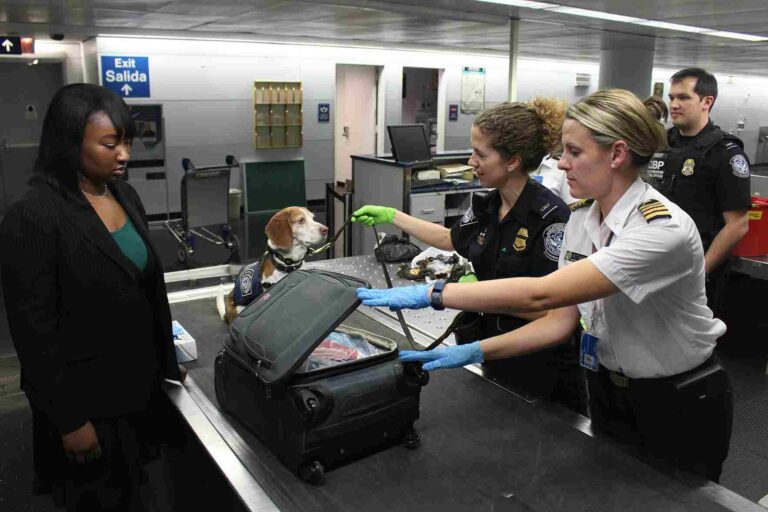
- [ ] Prohibited items checked. Sharp objects, certain aerosols, oversized liquids, and other restricted items cannot go in your carry-on. Review your airline’s prohibited items list. When in doubt, put it in your checked bag or leave it at home.
- [ ] Valuables, medication, and documents in carry-on. Your checked bag can be delayed, lost, or damaged. Anything you genuinely cannot afford to lose, including your passport, medication, laptop, and any cash or cards, should be on your person or in your carry-on.
- [ ] Bag tags and locks checked. If you use a luggage lock, make sure you have the key or combination accessible. If your airline uses bag tags, confirm they’re attached securely after check-in and note your baggage tag reference number.
Section 4: Your Phone and Electronics
Your phone is your boarding pass, your map, your communication lifeline, and your emergency backup for documents. It needs to be ready before you leave.
- [ ] Phone fully charged. Charge overnight and top up in the morning. Consider packing your charger in your carry-on rather than your checked bag so you can charge at the airport or on the plane.
- [ ] Power bank charged and packed. Confirm that your power bank’s capacity is within the airline’s carry-on rules (most airlines allow up to 100Wh; higher capacity banks may be restricted). Keep it in your carry-on, not your checked bag, as airlines prohibit power banks in checked luggage.
- [ ] Offline maps downloaded. Download Google Maps offline for your destination city and the area around your accommodation before you leave home. When you land and before you have a local SIM, you’ll have a working map without needing data.
- [ ] Important contacts saved offline. Nigerian embassy or consulate contact for your destination country, your airline’s customer service number, your accommodation’s phone number, your travel insurance emergency line, and a trusted contact in Nigeria who can assist remotely if needed.
- [ ] Google Translate offline language pack downloaded. If you’re transiting through or arriving in a country where English is not the primary language, download the relevant language pack to Google Translate while you still have WiFi. It works offline once downloaded.
- [ ] Boarding pass downloaded and accessible offline. Airline apps sometimes lose connectivity at inconvenient moments. Download your boarding pass to your phone’s wallet or save it as a screenshot so it works without data.
Section 5: The Morning Itself
Everything above should be done the evening before. The morning of your flight should be logistics only.
- [ ] Wake up with enough time. For a 9am international flight from Lagos, waking up at 4am is not excessive. For an afternoon flight, work backwards from your required airport arrival time and add buffer for traffic.
- [ ] Eat something before you leave. Airport food is expensive. Plane food on short-haul flights is limited or non-existent. Arriving at the airport hungry adds to stress. Have a meal at home before you leave.
- [ ] Dressed practically. Wear shoes you can slip on and off easily for security screening. Avoid wearing excessive metal jewellery, belts with heavy buckles, or anything that will repeatedly trigger the metal detector. Dress in comfortable layers if you’re flying long-haul since aircraft cabins are cold.
- [ ] Final document check before leaving the house. Passport, visa printout, boarding pass, yellow card, accommodation booking, return ticket. Touch each one physically before you lock the door. This takes 60 seconds and has saved many trips.
- [ ] Transport to airport confirmed. Whether it’s a pre-booked ride, a family member dropping you, or a taxi, confirm it is coming and give yourself extra buffer. Check traffic on Google Maps for your actual departure time the night before.
- [ ] House secured. Switch off appliances, lock all doors and windows, confirm someone trustworthy knows you’ve left and has a contact number for you abroad. This is not just practical, knowing the house is secured properly means one less thing occupying your mind at the airport.
Seun’s Travel Morning Done Right
Seun, 25, had a 7am flight from Lagos to London. The night before, he laid out every document on his desk and checked each one: passport (valid until 2028), printed visa, printed boarding pass, printed hotel booking, yellow card, return flight confirmation. He put them all in a clear document wallet inside his carry-on’s front pocket.
He weighed his checked bag. It was 24kg, just under the 23kg limit with a 1kg tolerance his airline allowed. He sorted his liquids bag, three travel-size items in a clear ziplock, and packed it in his carry-on. His laptop went in the padded sleeve at the top.
He set his alarm for 3:30am. He ate bread and eggs before leaving at 4:15am. He arrived at MMIA by 5:10am. He cleared check-in, immigration, and security before 6:15am, sat at the gate with almost an hour to spare, and boarded calmly when his row was called.
He didn’t do anything unusual. He just did everything the night before.
FAQs
Should I print everything or is my phone enough? Print the critical documents: visa approval letter, boarding pass, accommodation booking, and return ticket. These are the items that cause the most friction when only available on a phone screen. A printed backup takes two minutes and costs almost nothing. For everything else, your phone is fine.
What if I forget something important and only realise when I’m already at the airport? It depends on what it is. A forgotten charger or snacks: buy it at the airport. A forgotten yellow card: this is serious for international travel and may affect boarding. A forgotten visa printout: email it to yourself and see if the airline accepts digital, but call ahead to confirm. A forgotten passport: go back home. There’s no workaround for a missing passport.
How much local currency should I arrive with? Enough for immediate transport and one meal in your destination city. For UK arrivals, roughly £30 to £50. For Canada, $40 to $60 CAD. For most European cities, €30 to €50. Exchange the rest in the city at a better rate than the airport offers. Don’t carry large amounts of cash through airports.
Can I take food from Nigeria in my carry-on? Solid, packaged food is generally allowed in your carry-on. Homemade soups, stews, or liquid-based foods fall under the liquids rule if they’re in containers. Customs at your destination is a separate question: many countries restrict or prohibit fresh meat, produce, and certain foods. Check the customs rules for your specific destination before packing food.
What if my online check-in didn’t work and I don’t have a boarding pass? Go to the airline’s check-in counter at the airport as early as possible. Explain the situation. They’ll check you in manually. This is why arriving 3 hours before an international flight matters. If check-in failed online, you need that extra time to sort it at the counter without missing your flight.
Print This. Use It. Travel Well.
This checklist works best when you run through it the evening before your flight, not on the morning of. By the time your airport morning arrives, everything on this list should already be ticked. The morning itself should just be eating, dressing, and leaving on time.
Save this page. Print the checklist sections if it helps. And share it with anyone you know who’s flying for the first time.
If you’re at the stage of planning which country to move to, what visa route to take, or how to build your japa plan from scratch, DeyWithMe has the guides, tools, and calculators to help you work through every step.