The emergency doesn’t always happen after you land. Sometimes it happens at check-in when you reach into your bag and your passport isn’t there. Sometimes it’s mid-flight when you start feeling genuinely unwell. Sometimes you land at your transit airport and find your connecting flight has been cancelled with no clear information about what happens next.
First-time travellers from Nigeria tend to be well prepared for the expected parts of the journey. The document checklist, the airport arrival time, the security process. What catches people off guard is the unexpected, because nobody told them who to go to, what to say, or what their rights actually are.
This article covers the airport emergencies that happen most often, who handles each one, and what to do from the moment you realise something has gone wrong.
Quick Summary
- Most airport emergencies have a clear person to approach: airline staff for flight issues, airport information desks for general help, security for safety concerns, and airport medical staff for health emergencies.
- If you realise your passport is missing before you’ve boarded, report it immediately to airport security and your airline. Don’t wait and hope it turns up.
- Flight delays caused by the airline come with specific passenger rights depending on the airport country. Know the basics before you fly.
- A language barrier is not an emergency but it can make everything feel like one. Most major international airports have multilingual staff or interpretation services.
- Saving key contact numbers offline before you travel is the single most useful thing you can do to prepare for any airport emergency.
Emergency 1: You Realise Your Passport Is Missing Before You Board
You’re at the check-in counter or moving through the departure hall and you reach for your passport. It’s not where it should be. Your stomach drops.
First: don’t panic and don’t leave the spot.
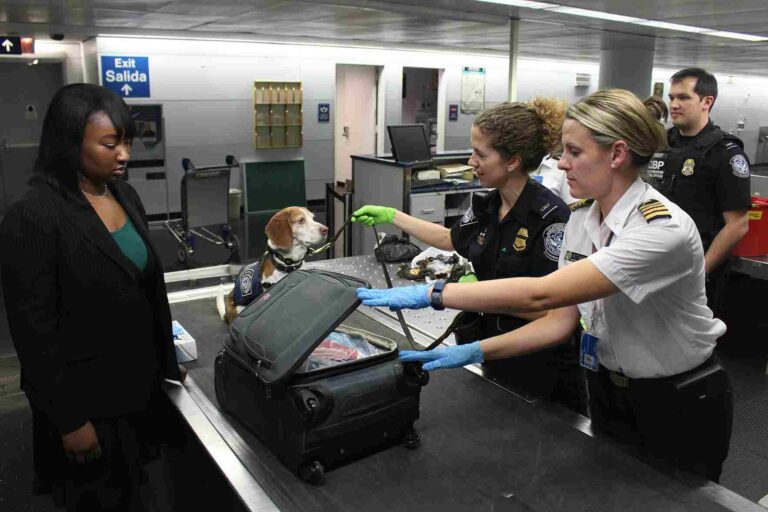
Retrace the last place you definitely had it. If you were at a check-in counter, go back. If you went through security, find the security supervisor immediately. Airports log found items, especially documents, because a passport found in a security tray or on a seat is always reported.
Who to approach:
- Security supervisor at the last checkpoint you cleared
- Your airline’s check-in staff if you’ve just come from the counter
- Airport lost property office, usually signposted in the departure hall
If you genuinely cannot find it and your flight is in the next few hours:
- Report the loss to airport police and get a written incident report
- Contact the Nigerian High Commission or Embassy for the country you’re departing from. If you’re departing Nigeria, contact the Nigeria Immigration Service office at the airport directly. They have officers stationed at departure halls.
- Your airline needs to know immediately. They may hold your boarding until the situation is resolved, or they may need to rebook you.
Do not attempt to board an international flight without your passport. You won’t get through immigration at the other end and you may not even be allowed to board. Addressing it before departure is always better than addressing it on the other side.
The reason to have a digital copy of your passport saved in your cloud storage (Google Drive, email, or similar) before you travel is precisely for this moment. It doesn’t replace the physical document but it gives officials enough information to verify your identity while the situation is being resolved.
Emergency 2: Your Flight Is Delayed or Cancelled
You check the departures board and your flight status has changed. It might say “Delayed,” “Gate Change,” or worst of all, “Cancelled.” The announcement system is unclear and the gate area is filling with confused passengers.
Who to approach: your airline’s staff first.
Every airline operating at an airport has ground staff, either at the gate, at a customer service desk, or at the check-in counter. Find them. They are the only people with accurate, real-time information about your specific flight. Airport information desk staff can point you in the right direction but cannot make rebooking decisions.
What you’re entitled to depends on where you are.
Passenger rights vary significantly by country. In broad terms:
- Within Nigeria, the Nigerian Civil Aviation Authority (NCAA) has consumer protection regulations covering delays and cancellations. If your flight is significantly delayed or cancelled, your airline has obligations including information, refreshments for long delays, and rebooking or refunds for cancellations. The details depend on the specific regulation in force. Ask the airline representative directly what they’re offering.
- At airports in the EU or UK, passenger rights protections are among the strongest in the world. A cancellation or a delay of 3 hours or more at arrival, caused by the airline rather than extraordinary circumstances, may entitle you to compensation in addition to a rebooking. Ask the airline staff what you’re entitled to under the relevant regulation and get the answer in writing.
- At airports in Canada, the US, and Australia, passenger rights exist but the compensation thresholds and conditions differ from EU rules. Ask the airline directly.
What to do practically:
- Go to the airline’s customer service desk or gate staff immediately
- State your name, flight number, and booking reference
- Ask clearly: is this delay or cancellation within the airline’s control?
- Ask what they’re offering: rebooking, voucher, hotel, meal allowance
- Get everything confirmed in writing, either a printed voucher or a screenshot of the rebooking confirmation
If you’re stuck overnight, the airline should provide hotel accommodation for cancellations within their control. Ask for this explicitly. Don’t assume it will be offered automatically.
Emergency 3: You’re Ill at the Airport or On the Plane
Airports and aircraft both have procedures for medical situations. What varies is how quickly you can access help and how clearly you communicate what’s wrong.
At the airport before boarding:
Every major international airport has a medical centre or first aid point. The location is on the airport map and any staff member can direct you. If the situation is urgent, for example someone collapses, has difficulty breathing, or loses consciousness, shout for help immediately and loudly. Airport staff respond fast to medical emergencies.
For less acute situations: nausea, severe headache, dizziness, or general unwellness after a long transit, find the medical centre rather than pushing through. Missing your flight because you stopped for medical attention is a recoverable situation. Collapsing on the aircraft or at a foreign airport without having addressed it is significantly harder to manage.
On the aircraft:
Cabin crew are trained in first aid. If you feel unwell during a flight, press the call button and tell the cabin crew. Don’t try to manage it quietly if it’s getting worse. Aircraft carry basic medical equipment and most long-haul flights have a medical professional on board at least some of the time.
If there’s a medical emergency on board, the crew may ask if there’s a doctor or nurse among the passengers. They may also contact ground-based medical support by radio. In serious cases, the aircraft may divert to the nearest airport. This is rare but it happens.
Medication: if you take regular medication, keep it in your carry-on, not your checked luggage. Always travel with more than you need for the trip duration in case of delays. Carry a copy of the prescription or a letter from your doctor if the medication is controlled or might raise questions at customs.
Emergency 4: You’re Stuck in Transit and Don’t Know What to Do
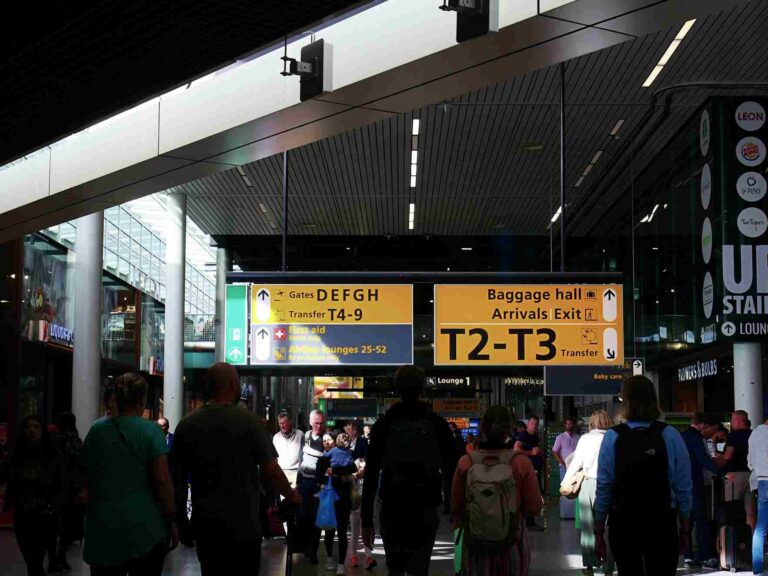
You’ve landed at your transit airport. You’re not sure where to go. Your connecting gate isn’t showing on your boarding pass yet. The airport is enormous and unfamiliar. You don’t know if you need to go through immigration or stay airside.
This is not technically an emergency but it feels like one when you’re tired, the airport is busy, and your connecting flight leaves in 90 minutes.
Who to approach: airport information staff or your airline’s transfer desk.
Most major hub airports, Heathrow, Dubai, Amsterdam Schiphol, Doha Hamad, have dedicated transit assistance desks or transfer staff stationed throughout the terminal. Look for an information point or ask any uniformed airport staff member.
Tell them: “I have a connecting flight to [destination] on [airline], departing at [time]. Where do I go?”
They will direct you. This is what they’re there for.
Key things to know about transit:
- Some countries require a transit visa even if you’re not leaving the airside area. The UK requires a Direct Airside Transit Visa for Nigerian passport holders transiting through certain airports. Check this before you book your itinerary, not when you’re already in the transit hall.
- If you’re transiting between terminals, there may be a shuttle bus or train. This takes time. Factor it in.
- If your first flight arrived late and you’re worried about missing your connection, go directly to your airline’s transfer desk before doing anything else. Don’t collect checked bags, don’t go through immigration, don’t look for food. Get to the transfer desk first.
Emergency 5: You Can’t Communicate Effectively Due to a Language Barrier
You’re at a foreign airport. The staff member is speaking quickly in English with a thick accent you can’t follow, or in a language you don’t speak at all. You don’t understand what’s being asked of you and you don’t know how to explain your situation clearly.
This is more common than people admit and it’s manageable.
What to do:
- Say clearly and calmly: “I’m sorry, I don’t understand. Can you speak more slowly?” Most staff will accommodate this without any issue.
- If the language is genuinely different, look for staff with an English-speaking badge or ask to be directed to someone who speaks English. Most major international airports have multilingual staff or access to interpretation services.
- Use your phone. Google Translate works offline if you download the relevant language pack before you travel. It’s not perfect but it’s enough for basic airport communication.
- Show rather than tell. If you have a document that answers the question being asked, point to it. Your boarding pass, your booking confirmation, your passport. Documents communicate across language barriers better than spoken explanations.
What not to do: Don’t pretend to understand when you don’t and then act on what you thought was said. Nodding along when you’re confused and then going in the wrong direction wastes time and can create genuinely serious situations at checkpoints.
Kelechi in Dubai
Kelechi, 29, was transiting through Dubai International on his way from Lagos to Melbourne. His first flight was delayed by 40 minutes, leaving him with less than 2 hours for his connection instead of the 3 he’d planned on.
He landed, saw the departures board, and couldn’t immediately find his Melbourne flight. He felt the panic starting. Instead of standing still and scrolling his phone, he walked directly to the nearest Emirates transfer desk, stated his name, his connection, and his departure time, and asked what he needed to do.
The agent checked his booking, confirmed the gate, told him he had enough time, and pointed him toward the correct terminal train. He made his connection with 35 minutes to spare.
The whole interaction took four minutes. It only happened that cleanly because he went to the right person immediately instead of trying to figure it out alone.
Who to Approach for What: A Quick Reference
When something goes wrong at the airport, knowing who handles what saves you the time of approaching the wrong person:
- Flight delay, cancellation, rebooking: your airline’s ground staff or customer service desk
- Lost passport or documents: airport security supervisor, then airport police, then your airline
- Medical emergency: any airport staff member, loudly and immediately
- Transit confusion or missed connection: airline transfer desk or airport information point
- Language barrier: request English-speaking staff or use Google Translate
- General directions or information: airport information desk (usually marked with an “i” symbol)
- Safety concerns or suspicious behaviour: airport security directly
- Rights violation or extended detention: request contact with the Nigerian embassy or consulate
Emergency Preparedness Checklist
Do this before you leave for the airport:
- [ ] Digital copies of passport, visa, and booking confirmation saved in cloud storage
- [ ] Nigerian embassy or consulate contact saved for destination country
- [ ] Airline customer service number for your route saved offline
- [ ] Travel insurance policy number and emergency line saved
- [ ] Connecting flight details including gate and departure time noted separately
- [ ] Transit visa requirement checked for any layover country
- [ ] Regular medication in carry-on with prescription copy if applicable
- [ ] Google Translate offline language pack downloaded for transit country if needed
- [ ] Trusted contact in Nigeria who can assist remotely if needed
FAQs
What if I’m at a small airport with limited staff and something goes wrong? Smaller airports have fewer resources but they still have someone in charge. Find the most senior-looking staff member in uniform and explain your situation. If it’s a medical emergency, call the local emergency number. If it’s a flight issue, contact your airline directly by phone using their customer service number, which is why saving it before you travel matters.
The airline is not offering me anything for a long delay. What do I do? Ask again, in writing if possible. Send an email to the airline’s customer service address with your booking reference, flight number, and the nature of the delay. Keep records of everything. If you’re at an EU or UK airport and the delay is 3 hours or more at arrival, you may be entitled to compensation under passenger rights law regardless of what the ground staff tell you. You can file a claim after the fact.
I missed my connection and the airline wants me to buy a new ticket. Is that correct? It depends on how your flights were booked. If both flights are on a single booking reference and the missed connection was caused by the airline’s delay, they cannot make you buy a new ticket. They must rebook you. If the flights were on separate bookings, your situation is different and you may indeed need to purchase a new ticket. Travel insurance with missed connection cover is relevant here.
Can I leave the airport during a long delay or overnight cancellation? It depends on whether you need a visa for the country you’re transiting through. If you don’t need a visa or transit visa to enter the country, you can technically exit the airport. If you do need a visa and don’t have one, you must stay airside. As a Nigerian passport holder, always check visa requirements for any country where you might have a layover before you travel.
What do I do if someone steals from me inside the airport? Report it to airport security or airport police immediately. Get a police report or incident report reference number. Contact your bank immediately to block any cards that were in the stolen bag or wallet. Contact your airline if your travel documents were taken. Contact the Nigerian embassy if your passport was stolen. Act fast on all of these, especially the bank.
Preparation Is the Best Emergency Plan
Most airport emergencies feel worse than they are because the person in the middle of them doesn’t know what to do or who to ask. The situations themselves are usually solvable. The panic comes from unfamiliarity.
Know who handles what. Save the right numbers before you leave. Keep digital copies of your documents somewhere you can access them without your physical bag. And when something goes wrong, find the right person immediately rather than standing still and hoping it resolves itself.
If you’re working through the full picture of what international travel looks like as a Nigerian planning to relocate, DeyWithMe has guides covering every stage from passport and visa applications to landing, settling in, and building life abroad.