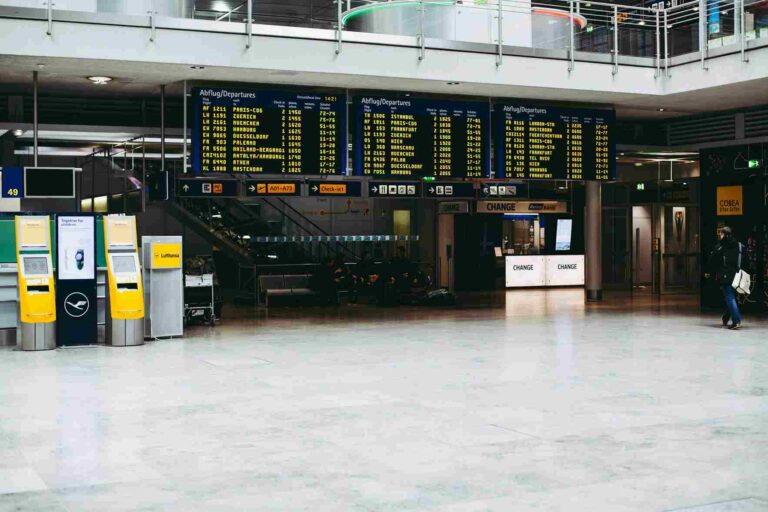
The queue is moving and you’re next. You watch the person ahead of you walk through the scanner without any issue. Then you step through and the alarm goes off. An officer steps toward you. Everyone behind you is watching.
Most first-time flyers dread this scenario. The alarm went off because of a forgotten coin in a jacket pocket, or a belt they didn’t remove, or a phone they left in their bag instead of a tray. It’s almost never anything serious. But because the environment is unfamiliar and the stakes feel high, the moment becomes disproportionately stressful.
Security screening is not complicated once you understand what’s happening and why. This article breaks down exactly what to expect, what to do, and how to move through it without freezing or slowing down the queue.
Quick Summary
- Airport security screening is a fixed process: trays, X-ray machine for bags, body scanner or metal detector for you. It’s the same pattern worldwide.
- Remove your laptop, belt, phone, keys, and anything in your pockets before you reach the front of the queue. Not at the machine.
- Liquids in your carry-on must be in containers of 100ml or less, all packed in one clear resealable bag. Oversized containers will be confiscated.
- If your bag is flagged for a manual check, stay calm. It’s routine. Answer questions honestly and let the officer do their job.
- Security at foreign airports like Heathrow or Pearson is stricter and more thorough than what most Nigerian airports currently run. Be more prepared, not less.
What Airport Security Screening Actually Is
Security screening exists to prevent prohibited items, weapons, and dangerous materials from getting onto an aircraft. Every person and every bag that enters the airside area of an airport has been through some form of screening. No exceptions.
The process involves two parallel checks happening at the same time: your bags go through an X-ray machine that shows their contents to a security officer on a monitor, and you walk through either a metal detector or a full-body scanner that detects metallic and non-metallic items on your person.
That’s the core of it. Everything else, the trays, the conveyor belt, the additional pat-down, is just the mechanics of making that process efficient for thousands of people passing through every day.
Understanding this makes the whole thing less intimidating. You’re not being singled out. Everyone goes through the same thing.
How to Prepare Before You Reach the Front of the Queue
This is where most first-time travellers lose time and composure. They reach the front of the queue and only then start emptying their pockets, looking for their laptop, and taking off their belt. The officer is waiting. The queue is backing up. They’re flustered.
Start preparing while you’re still in the queue. By the time you reach the conveyor belt, you should already have everything ready to go into the trays.
Here’s exactly what needs to come out:
- Laptop or tablet: removed from your bag and placed in its own separate tray. Not in the bag, not in a tray with other items. Its own tray.
- Phone: placed in a tray
- Belt: removed and placed in a tray
- Watch and jewellery: removed and placed in a tray
- Keys and coins: emptied from all pockets into a tray
- Jacket or thick outer layer: removed and placed in a tray at many airports
- Shoes: some airports require removal, some don’t. Watch what the person ahead of you does or look for a sign at the checkpoint.
- Liquids bag: if you have liquids in your carry-on, your clear 100ml bag should be easily accessible and may need to be placed in a tray separately.
Your carry-on bag then goes on the belt to go through the X-ray machine. You go through the body scanner or metal detector separately.
The 100ml Liquids Rule: What It Means in Practice
This rule exists at virtually every international airport in the world and it is consistently enforced. Many first-time flyers know about it in theory but misapply it in practice.
The rule is:
- Any liquid, gel, cream, paste, aerosol, or similar substance in your carry-on must be in a container no larger than 100ml
- All such containers must fit inside one clear, resealable plastic bag, roughly the size of a small sandwich bag
- You are allowed one bag per person
- This bag must be easily accessible, as you may be asked to remove it from your carry-on and place it in a separate tray
What counts as a liquid under this rule: water, juice, soft drinks, perfume, cologne, toothpaste, face cream, lotion, shampoo, conditioner, hand sanitiser, lip gloss, mascara, liquid foundation, cooking sauces, yoghurt, soup, and anything else that flows or spreads.
What catches people out:
- A 200ml bottle of moisturiser that’s only half full. The container is still 200ml. It gets confiscated.
- A full-size bottle of perfume tucked in a bag pocket and forgotten. Confiscated.
- Toothpaste in a standard tube, which is usually more than 100ml. Confiscated unless it’s a travel-size tube.
- A bottle of water bought before you reached security. You can drink it before the checkpoint or pour it out. Once you’re past security, you can buy another one.
The fix is simple: put all your full-size toiletries in your checked luggage. Carry only travel-size versions (100ml or less) in your carry-on, in that clear bag. Buy anything else after you’re through security.
Walking Through the Body Scanner or Metal Detector
Once your bags are on the belt, you walk through the body scanner or metal detector. The officer at the other end of the machine will signal when it’s your turn.
Walk through calmly. Arms relaxed or slightly raised if instructed. Don’t rush.
If the alarm sounds, stop. An officer will approach you. This is not an arrest. It’s not an accusation. It happens hundreds of times a day at any airport. The most common reasons are a forgotten coin, a belt buckle that was missed, metal in shoes, or a medical implant like a joint replacement.
The officer will usually ask you to step to the side and will use a handheld scanner to identify where the alert is coming from. You may be asked to remove an item, or a pat-down may be conducted. Cooperate calmly and tell the officer if you have any medical implants or devices that might be triggering the scanner.
If you have a pacemaker or other metal medical implant, tell the officer before you go through. Most airports have alternative screening procedures for passengers with medical devices.
What Happens If Your Bag Is Flagged
The X-ray operator may see something in your bag that requires a closer look. This happens routinely and does not mean you’ve done something wrong. Dense or overlapping items in a bag can look suspicious on a monitor. Cables, electronics, and certain food items commonly trigger manual checks.
If your bag is pulled, an officer will ask your permission to open it and will search through it in front of you. They’ll identify the item that triggered the flag and either clear it or remove it.
What to do:
- Stay at the checkpoint and wait. Don’t walk away.
- Answer questions directly and honestly.
- If something is removed that you think shouldn’t be, ask the officer to explain why. Do this calmly.
- If you disagree with a decision, ask to speak to a supervisor. Do not argue with the officer directly.
The vast majority of manual bag checks take two to three minutes and end with the passenger being cleared to proceed.
What Nigerian Airport Security Looks Like vs Abroad
Security at major Nigerian airports follows the same principles as international standards, but the level of enforcement and the technology varies by airport and sometimes by time of day.
At MMIA Lagos and Nnamdi Azikiwe Abuja, you’ll encounter X-ray machines, body scanners, and trained security personnel. The process is recognisable. It can sometimes feel less rigidly enforced than what you’ll encounter abroad, particularly at quieter hours.
At major international airports abroad, like London Heathrow, Dubai International, or Toronto Pearson, security is stricter, more consistent, and more thorough. The queues are better organised but the rules are applied with less flexibility. A liquid container that was waved through in Lagos will be confiscated at Heathrow without discussion. A laptop left in a bag that got through one checkpoint will not get through the next.
The practical implication is this: if you’ve been through a Nigerian airport before and think you know what to expect, don’t assume the same latitude applies abroad. Meet the international standard every time, regardless of where you’re departing from.
Ifeoma’s First Time Through Security
Ifeoma, 24, was flying from Lagos to Amsterdam for a master’s programme. She’d never flown internationally before. She knew about the liquids rule but hadn’t packed a clear bag. Her moisturiser, a 150ml bottle, was in a side pocket of her carry-on.
At Lagos security, the X-ray flagged her bag. The officer opened it and found the moisturiser. It was over 100ml. It was confiscated.
She was upset but she cleared security and boarded her flight. At Schiphol Airport in Amsterdam, she went through security again for a connecting terminal. This time she had no liquids issue because the confiscated bottle was gone.
When she landed and told her friend what happened, her friend pointed out she could have just put the moisturiser in her checked bag before leaving home. A ₦3,000 bottle lost because of one packing decision made the night before.
That’s the version of the story that doesn’t need to happen to you.
Security Screening Checklist: Before You Reach the Belt
Use this while you’re in the queue:
- [ ] Laptop removed from bag and ready to go in its own tray
- [ ] Phone out of pocket and ready for a tray
- [ ] Belt unbuckled and ready to remove
- [ ] Watch and jewellery removed if applicable
- [ ] Keys and coins emptied from all pockets
- [ ] Jacket or thick outer layer removed if required
- [ ] Liquids bag (clear, one bag, all containers 100ml or less) accessible
- [ ] Shoes ready to remove if the checkpoint requires it
- [ ] Nothing left in back pockets or jacket pockets
FAQs
Why did the alarm go off when I walked through the scanner even though I removed everything? A few things can trigger metal detectors that aren’t obvious: underwire in a bra, metal in shoe soles, a forgotten coin in a deep pocket, or a medical implant. If it keeps happening after you’ve removed the obvious items, tell the officer about any metal in your clothing or body and they’ll use the handheld scanner to identify the exact source.
Can I refuse a pat-down at airport security? Technically you can decline, but the consequence is that you won’t be permitted to proceed into the airside area or board your flight. A pat-down is one of the standard screening methods when a body scanner alarm can’t be resolved another way. If you have a medical reason for concern about certain screening methods, tell the officer before the process starts.
Do I have to take my shoes off at Nigerian airports? It varies. Some checkpoints in Nigerian airports ask for shoe removal, especially for international departures. Watch what the passengers ahead of you are doing or look for a sign at the checkpoint. At many international airports abroad, shoe removal is standard for all passengers. Be prepared for it either way.
What happens to items that are confiscated at security? They’re kept by the airport security authority. You don’t get them back, and there’s no retrieval process. If a valuable item like an expensive perfume is at risk of confiscation, put it in your checked luggage before you reach the security checkpoint. Once it’s in the tray and flagged, it’s gone.
Can I go back through security if I realise I left something in the departure hall? Generally, no. Once you’ve passed through security into the airside area, you cannot go back out and come back in without going through the full screening process again. If you’ve left something important on the other side, speak to a security officer who may be able to facilitate an exception, but this is at their discretion and not guaranteed. The lesson is to double-check everything before you join the security queue.
Know the Process, Move Through It Confidently
Security screening is designed to be fast when passengers are prepared. The people who slow it down, and stress themselves out in the process, are almost always the ones who weren’t ready when they reached the front of the queue.
Prepare while you’re waiting in line. Remove everything that needs to come out before you reach the machine. Know your liquids are packed correctly. Walk through calmly. Collect everything from your trays before you move on.
If you’re a first-time flyer preparing for your japa journey, airport security is one small part of a much bigger process. DeyWithMe has guides covering every stage, from getting your Nigerian passport to navigating visa applications and landing in your destination country for the first time.