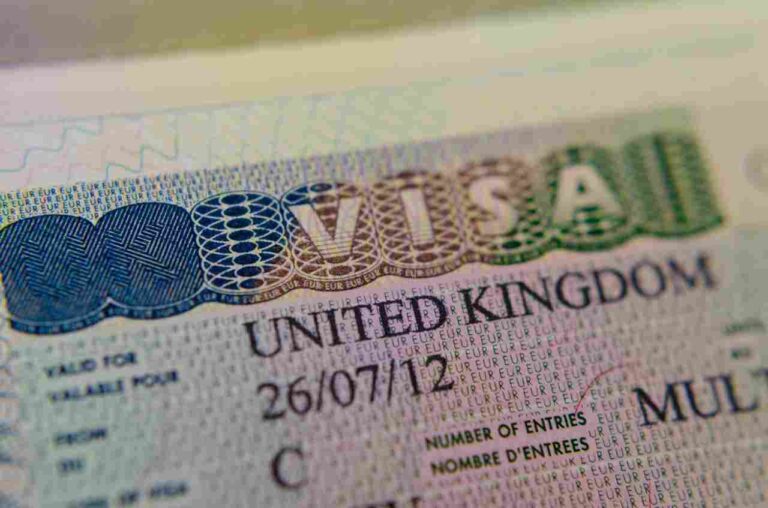
The UK is the most popular japa destination for Nigerians. More Nigerians hold UK visas than any other foreign nationality, and the combination of English language, NHS employment demand, cultural familiarity, and existing diaspora networks makes it the first choice for a large share of people actively planning to relocate.
But “the UK is a good option” is background noise at this point. What actually matters is understanding which specific route applies to your situation, what it genuinely requires, and what the honest cost and timeline look like in 2025 and beyond.
The UK immigration system changed significantly in recent years. Salary thresholds went up. The Immigration Health Surcharge increased. Some routes that were commonly used have been modified. If you are working from information that is more than 12 to 18 months old, some of it may no longer be accurate.
This article covers the main legal routes Nigerians use to relocate to the UK, what each one involves, and what you need to know before committing your preparation and your money to any of them.
Quick Summary
- The UK has four main legal routes for Nigerians: Student visa, Skilled Worker visa, Family visa, and the Graduate Route (post-study work).
- The path to Indefinite Leave to Remain (ILR), the UK equivalent of permanent residency, requires 5 years of continuous residence on a qualifying visa.
- Most routes require a Confirmation of Acceptance for Studies (CAS) from a licensed university, or a Certificate of Sponsorship (CoS) from a licensed employer. Neither can be faked.
- The Immigration Health Surcharge (IHS) adds significantly to the total cost of most UK visas. Check the current rate on gov.uk before you budget.
- All salary thresholds, financial requirements, and eligibility criteria should be verified on gov.uk at the time you are applying. The rules have been changing and figures in this article may be outdated by the time you read it.
Route 1: UK Student Visa (The Most Common Entry Point)
The UK Student visa is the most popular route for Nigerians moving to the UK, and for good reason. It is accessible, has a clear process, and leads directly into the Graduate Route, which gives you time to find work and transition to a longer-term visa.
Who it is for: Nigerians who have been accepted onto a programme at a UK higher education institution that is a licensed student sponsor, and who want to study in the UK as a pathway to building a life there.
What you need:
- A Confirmation of Acceptance for Studies (CAS) number from your university
- IELTS for UKVI Academic or another approved Secure English Language Test (SELT) meeting the required score
- Financial evidence showing you can pay your tuition and support yourself (check the current UK Visas and Immigration financial requirements on gov.uk as the figures are updated)
- A TB test certificate from a UKVI-approved clinic in Nigeria (mandatory for Nigerian applicants)
- Payment of the visa application fee and the Immigration Health Surcharge (IHS) upfront
The Graduate Route: After completing a UK bachelor’s, master’s, or PhD programme, you can apply for the Graduate Route visa, which allows you to stay and work in the UK for 2 years (3 years for PhD graduates) without needing a job offer. This period is used by many Nigerians to find sponsored employment and transition to a Skilled Worker visa.
Honest challenges: International student tuition in the UK is expensive. Programme costs vary significantly by institution and subject, but postgraduate programmes at most universities run from £12,000 to £30,000+ per year for international students. The IHS on top of this, for a 1 or 2 year programme, adds thousands of pounds more. This route requires serious financial planning before you even look at a university prospectus.
Route 2: UK Skilled Worker Visa (The Direct Work Route)
The Skilled Worker visa is for Nigerians who have a job offer from a UK employer who holds a valid Home Office sponsorship licence. It is a straightforward route in principle: employer offers job, sponsors visa, you relocate.
Who it is for: Nigerians with professional qualifications and work experience in occupations that UK employers are actively recruiting internationally. Healthcare (nursing, medicine, pharmacy, allied health), technology, engineering, and education are among the sectors with the most active international recruitment.
What you need:
- A job offer from a UK licensed sponsor (your employer must have a sponsorship licence)
- A Certificate of Sponsorship (CoS) issued by your employer
- Your occupation must be in an eligible role and meet the relevant salary threshold (check the current salary threshold on gov.uk, as it was significantly raised in 2024)
- IELTS for UKVI or equivalent at the required level (varies by occupation and employer)
- Payment of the visa application fee and IHS upfront
The shortage occupation advantage: Some occupations are on the UK’s Immigration Salary List (previously called the Shortage Occupation List), which means they may have different salary threshold conditions. Check the current list on gov.uk as it is updated and the rules around it have changed in recent years.
Honest challenges: The salary threshold increase in 2024 raised the general minimum salary for Skilled Worker visas significantly. For some roles, particularly entry-level or junior positions in certain sectors, this means the salary offered must be higher than before for the role to qualify for sponsorship. Check the current threshold on gov.uk and confirm it applies to your specific role and SOC code.
Also, your employer must hold a valid sponsorship licence. Not all employers do. Search the public register of licensed sponsors on gov.uk to confirm your potential employer is listed before you accept a role expecting visa sponsorship.
Route 3: UK Family Visa (Spousal and Dependent Routes)
The Family visa covers Nigerians who have a close family member, typically a spouse or partner, who is a British citizen or someone with settled status in the UK.
Who it is for: Nigerians who are married to or in a civil partnership with (or in some cases, a long-term unmarried partnership with) a British citizen or a person with Indefinite Leave to Remain or settled status in the UK.
What you need:
- Your UK-based partner must meet a minimum income requirement (check the current income threshold on gov.uk, as this was also raised significantly in 2024)
- Evidence of your genuine relationship (photographs together over time, communication records, evidence of cohabitation or visits, financial links)
- Your UK-based partner may also need to show they can accommodate you without relying on public funds
- A TB test certificate from an approved clinic in Nigeria
- Payment of the visa application fee and IHS
The path to settlement: A UK Family visa typically starts with a 2.5 year visa, which can be extended for another 2.5 years. After 5 years on this route, you can apply for ILR (Indefinite Leave to Remain). After a further year with ILR, you can apply for British citizenship.
Honest challenges: The income requirement for family visas was raised substantially in 2024. Check the current minimum income threshold on gov.uk. If your UK-based partner does not meet this threshold, your application will be refused regardless of the genuineness of your relationship. There are some exemptions (such as when the sponsor receives certain benefits), but verify these carefully with the official guidance.
The relationship evidence requirement is also taken seriously. UKVI reviews family visa applications carefully for signs that the relationship is genuine and subsisting. A married couple who cannot provide evidence of ongoing contact and shared life will have a harder application than one who can.
Route 4: Graduate Route (Post-Study Work)
Strictly speaking, the Graduate Route is an extension of the Student visa journey rather than a standalone entry route. But it deserves its own section because it is a critical transitional pathway that many Nigerians use strategically.
What it does: After completing a qualifying UK degree (bachelor’s, master’s, or PhD) at a licensed higher education provider, you can apply for the Graduate Route. It gives you 2 years of open work rights (3 for PhD graduates), meaning you can work for any employer in any role without needing sponsorship.
Why it matters strategically: This 2 to 3 year period is the window in which most Nigerian students transition to a Skilled Worker visa. You use the time to find a sponsored employer, meet the salary threshold, and have your employer issue a CoS. From there, you apply for a Skilled Worker visa, which eventually leads to ILR after 5 years total on qualifying visas.
Honest challenges: The Graduate Route does not give you the right to bring dependants automatically. Rules around dependants on the Graduate Route have changed. Check the current Graduate Route dependant rules on gov.uk if you plan to bring family.
Also, the Graduate Route is not a path to ILR by itself. Time spent on the Graduate Route does not count toward ILR under the standard 5-year qualifying residence rule for most applicants. You need to switch to a route that qualifies, such as Skilled Worker, for your ILR clock to start.
Route 5: Other UK Routes Worth Knowing
Innovator Founder Visa: For Nigerians with a genuine, innovative business idea that has been endorsed by an approved endorsing body. This route replaced the older Tier 1 Entrepreneur route. It requires endorsement and a credible business plan. Not for everyone, but relevant for people with genuine startup ideas.
Health and Care Worker Visa: A specific sub-route of the Skilled Worker visa for doctors, nurses, and allied health professionals in NHS or social care roles. It has some advantages over the standard Skilled Worker route, including exemption from the IHS and a lower visa application fee. Check the current eligibility on gov.uk.
UK Ancestry Visa: If you have a grandparent who was born in the UK (or, in some cases, certain commonwealth territories), you may be eligible for a UK Ancestry visa. This gives you 5 years of open work rights and leads to ILR. Not widely applicable to Nigerians, but worth checking if any grandparent has UK-born heritage.
The Path to ILR and British Citizenship
Indefinite Leave to Remain (ILR) is the UK equivalent of permanent residency. It allows you to live and work in the UK without time restrictions or visa conditions. It is the goal for most Nigerians who come to the UK intending to stay long-term.
To qualify for ILR on most routes, you need:
- 5 continuous years of lawful residence in the UK on a qualifying visa (Student visa time does not count, but Skilled Worker, Family, and some other routes do)
- No significant absences from the UK (generally, no more than 180 days absence in any 12-month period during your qualifying residence)
- Meeting the knowledge of language and life in the UK requirement (passing the Life in the UK test and meeting the English language requirement)
- Passing the criminality and suitability checks
After holding ILR for 12 months, you can apply for British citizenship through naturalisation, provided you meet the residency and other requirements.
Combining Routes Strategically
Chidinma is 27, a pharmacist from Enugu. She wants to end up with UK permanent residency.
Year 1: She completes her GPhC registration assessment (the UK pharmacy regulator). She gets a job offer from a Boots pharmacy branch in Manchester through a UK recruitment programme for overseas pharmacists. Her employer holds a sponsorship licence and issues her a CoS. She applies for a Skilled Worker visa under the Health and Care Worker route.
Years 1 to 5: She works as a pharmacist in the UK on her Skilled Worker visa. She renews her visa when needed. She maintains less than 180 days absence from the UK in any 12-month period.
Year 5: She applies for ILR. She passes the Life in the UK test and meets all residency requirements. ILR granted.
Year 6: She applies for British citizenship. Granted.
She never studied in the UK. She went directly through employer sponsorship. Her profession’s shortage status helped, but the route itself is available to any professional in an eligible occupation who can find a licensed sponsor.
Frequently Asked Questions
How long does it take to get British citizenship from Nigeria? The minimum timeline from first arriving in the UK to British citizenship is 6 years (5 years on a qualifying visa for ILR, then 12 months with ILR before applying for citizenship). In practice, including application processing times at each stage, most people reach citizenship in 7 to 8 years from first arrival.
Can I bring my family with me on a UK Skilled Worker visa? Yes. Your spouse and dependent children can accompany you or join you later as dependants on your Skilled Worker visa. They can apply at the same time as you or after your visa is granted. Check the current dependant rules and IHS charges for dependants on gov.uk as these have changed.
Do I need a job offer before applying for a UK visa? For the Skilled Worker visa, yes. A job offer from a licensed sponsor is mandatory. For the Student visa, you need a university acceptance (CAS) not a job offer. For the Graduate Route, you apply after completing your UK degree and need no job offer. For the Family visa, you need a UK-based sponsor who is a British citizen or settled person, not an employer.
What is the difference between ILR and British citizenship? ILR (Indefinite Leave to Remain) gives you the right to live and work in the UK without restrictions and without a visa, but you remain a Nigerian citizen. British citizenship gives you a British passport, full voting rights, and the ability to sponsor family members as a British citizen. ILR is the step before citizenship on most routes.
Which UK Route Is Right for You
The UK is one of the most accessible japa destinations for Nigerians with the right profile, specifically because of the active demand for skilled professionals and the established infrastructure for Nigerian applicants (IELTS centres, TB test clinics, UKVCAS biometric centres).
The question is not whether the UK is a good destination. It is which of the routes above matches your current qualifications, your income, your family situation, and your timeline.
Use DeyWithMe’s UK route eligibility tools to check which pathways apply to your specific profile, calculate the total cost of your preferred route including visa fees, IHS, and first-year settlement costs, and build a preparation timeline that accounts for the lead times each document and test requires.