Getting the acceptance letter feels like the hard part is over. It is not.
A lot of Nigerians get into universities abroad, celebrate, tell their family, and then spend the next few months scrambling because they had no idea what came after the offer. The visa process is its own separate challenge, and it has tripped up people with legitimate admissions to good universities.
Incomplete financial documentation. Wrong bank statement format. Missing authentication. Applying too late. These are not rare edge cases. They are the most common reasons Nigerian student visa applications get delayed or rejected.
This article covers what happens after your acceptance letter arrives, step by step, from confirming your offer to holding your visa. It focuses on the UK and Canada since those are the two most popular study destinations for Nigerians right now, but the principles apply broadly to other destinations too.
Quick Summary
- Your acceptance letter is just the beginning. The visa process starts immediately after you receive it.
- Financial proof is the most common rejection point for Nigerian student visa applicants. Your bank statements need to show genuine, consistent funds, not a sudden large deposit.
- Most student visas require documents to be ready 3 to 6 months before your intended start date. Start early.
- The UK requires a Confirmation of Acceptance for Studies (CAS) number from your university before you can apply. Canada requires a Letter of Acceptance and proof of financial support.
- You do not need an agent to apply. Both the UK and Canada student visa applications are done online through official government portals.
Step 1: Confirm Your Offer and Understand What Comes Next
Before anything else, you need to formally accept your offer through the university’s admissions portal. For UK universities, this usually means accepting through UCAS (for undergraduate) or directly through the university system (for postgraduate). For Canadian universities, it is typically through their own student portal.
When you accept, pay close attention to:
- Tuition deposit deadline. Many universities require a deposit to hold your place. This is separate from your full tuition payment.
- CAS or Letter of Acceptance timeline. For the UK, your university will issue your CAS number after you accept and pay your deposit. You cannot apply for a UK Student visa without it. For Canada, you need the official Letter of Acceptance from the institution.
- Visa application deadline. Work backwards from your programme start date. Most visa processing takes 3 to 8 weeks, but give yourself more buffer than that.
Do not wait for everything to feel “ready” before you start preparing documents. Start the same week you accept your offer.
Step 2: Understand the Financial Proof Requirement
This is the section to read most carefully.
Both the UK and Canada require you to prove that you can pay your tuition and support yourself while studying. For the UK, you need to show funds covering your first year’s tuition plus a set living cost amount, held in your account for a minimum of 28 consecutive days before you apply. For Canada, the requirement covers tuition plus living expenses for the duration of your study.
Check the exact current figures on the official UKVI or IRCC website before you assume any number. These figures are updated and citing an outdated figure here could mislead you.
What the bank statements must show:
- [ ] The required amount present for the full 28-day period (UK) or equivalent (Canada)
- [ ] Consistent account activity, not a sudden large deposit that appeared recently
- [ ] Statements on official bank letterhead, showing your full name, account number, and transaction history
- [ ] Statements that are recent, typically within 31 days of your visa application date
The “sudden large deposit” problem is real. If someone transfers millions of naira into your account the week before you apply to boost your balance, visa officers are trained to spot this. It does not just fail to help; it can actively harm your application by raising fraud flags.
If your own savings are not sufficient, a sponsor’s bank statements can be used, but you will also need a signed sponsorship letter explaining the relationship and confirming financial support.
Step 3: Gather Your Documents
The exact list varies slightly by country and university, but for most Nigerian student visa applicants, you will need:
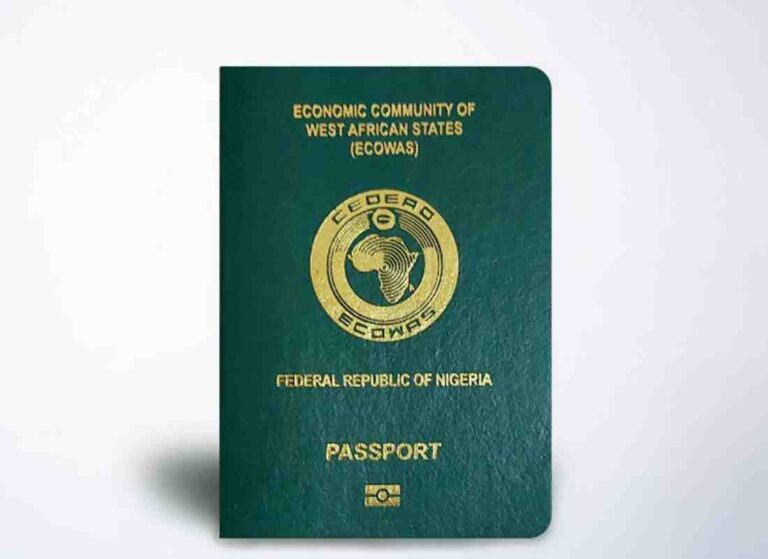
- [ ] Valid Nigerian international passport (at least 6 months validity beyond your course end date)
- [ ] Acceptance letter or CAS number from your university
- [ ] Academic transcripts and certificates (WAEC/NECO, university degree if postgraduate)
- [ ] English language test results (IELTS, TOEFL, or equivalent)
- [ ] Bank statements showing required funds (yours or your sponsor’s)
- [ ] Sponsor’s letter and financial documents (if someone else is funding you)
- [ ] Proof of fee payment or deposit to the university
- [ ] Tuberculosis (TB) test certificate (required for UK applicants from Nigeria)
- [ ] Passport photographs meeting the specific country’s requirements
- [ ] Statement of Purpose or personal statement (some applications ask for this)
For the UK, the TB test must be done at an approved clinic in Nigeria. A list of approved clinics is on the official UKVI website. Do not go to a random clinic and assume it will be accepted.
For Canada, you may also need to submit biometrics at a Visa Application Centre (VAC) in Nigeria. Check whether this applies to your application type on the IRCC website.
Step 4: Apply Through the Official Portal
Both the UK and Canada student visa applications are submitted online. There is no reason to pay an agent to do the actual submission for you.
For the UK Student visa: Apply through the official UK government website (gov.uk). You will need your CAS number, which your university sends you. The application asks for personal history, travel history, financial details, and your course information. You pay the visa application fee and the Immigration Health Surcharge (IHS) as part of the same application. After submitting online, you will be asked to book an appointment at a UKVCAS service point in Nigeria to provide your biometrics.
For the Canada Study Permit: Apply through the official IRCC portal (ircc.canada.ca). You will upload your Letter of Acceptance, financial documents, and other supporting materials. Canada has also introduced the Student Direct Stream (SDS) for Nigerian applicants, which can speed up processing if you meet the conditions, including having your IELTS results, a Guaranteed Investment Certificate (GIC), and your first year’s tuition paid upfront. Check whether SDS is still available for Nigerian applicants at the time you are applying, as programme availability can change.
Do not use third-party websites that look like official portals but are not. The official URLs for UK visa applications start with gov.uk. For Canada, use ircc.canada.ca. If a site is asking you to pay before you even reach the application form, you are in the wrong place.
Step 5: Biometrics and the Wait
After submitting your online application, both the UK and Canada will require you to provide biometrics (fingerprints and a photograph) at an official Visa Application Centre.
In Nigeria, these centres are in Lagos and Abuja primarily. Book your appointment as early as possible after your online submission. During peak student visa season, typically March to June, slots fill up fast.
After biometrics, the waiting begins. UK standard processing is typically around 3 weeks, though it can vary. Canada’s Study Permit processing times fluctuate significantly, sometimes running 8 to 12 weeks or longer during high-demand periods. Check the current processing times on the official IRCC website before you plan your travel dates.
You cannot rush processing by calling or emailing repeatedly. What you can do is make sure your application is complete and correct so there are no requests for additional information that slow things down further.
A Scenario That Shows How This Goes Wrong
Chioma is 24, from Delta State. She got into a master’s programme at a UK university starting in September. Her offer came in March. She was excited, told everyone, and assumed she had time.
She started gathering documents in July. Her bank statements were not ready because she had only deposited the required funds two weeks earlier. Her TB test appointment was 3 weeks out. Her CAS was issued by the university but she had not realised she needed to apply for the visa on the UKVCAS portal and book a biometrics appointment separately.
By the time everything was in order, her visa application went in mid-August. Processing took 3 weeks. She got her visa in early September but her course had already started. She enrolled late, missed orientation, and had a stressful first month that could have been avoided entirely.
The documents were never the hard part. Starting on time was.
Frequently Asked Questions
How early should I apply for a student visa after getting my acceptance letter? As early as you possibly can, within the allowed window. For the UK, you can apply up to 6 months before your course starts. For Canada, there is no fixed window but earlier is almost always better given processing times. Start preparing documents the moment you accept your offer, and apply for the visa as soon as your university issues your CAS or Letter of Acceptance.
Can I apply for a UK student visa without an IELTS score? Some universities waive the English language test requirement if you studied in English previously, for example if your undergraduate degree was taught entirely in English. But this is the university’s decision, not UKVI’s. UKVI still requires proof of English proficiency. Check your CAS details; the university will have listed the English language evidence they are using to support your application. Do not assume a waiver applies without confirming.
What happens if my student visa is rejected? A rejection comes with a reason letter explaining why. Common reasons for Nigerian applicants include insufficient financial evidence, doubts about genuine student intent, or incomplete documentation. You can usually reapply, but you will need to address the specific reason for rejection in your new application. An immigration solicitor (not a random agent) can help you understand the refusal letter if it is unclear. Check the OISC register for regulated UK immigration advisers.
Do I need to pay full tuition before getting my visa? For standard UK Student visa applications, you do not need to pay full tuition upfront, but you need to show you have the funds. For Canada’s Student Direct Stream (SDS), paying your first year’s tuition upfront and purchasing a GIC are part of the eligibility criteria. Check which route applies to your situation.
Can my parents or family member sponsor my student visa financially? Yes. You can use a sponsor’s funds as financial evidence. You will need their bank statements meeting the same requirements as if it were your own account, plus a signed sponsorship letter confirming the relationship and their commitment to fund your studies. Some applications also ask for evidence of the sponsor’s income source, like payslips or a tax clearance certificate.
Now That You Know the Process
The gap between “I got an offer” and “I have my visa” is manageable. It just requires starting on time and being organised about it.
Here is a simple timeline to work backwards from your course start date:
- 6 months before start: Accept your offer, pay deposit, request CAS or Letter of Acceptance.
- 5 months before start: Begin building your financial evidence. Your 28-day bank statement window needs to be in this period.
- 4 months before start: Complete TB test (UK), gather all supporting documents, get transcripts and certificates ready.
- 3 months before start: Submit your visa application online and book your biometrics appointment.
- 6 to 8 weeks before start: Attend biometrics, wait for decision.
DeyWithMe has dedicated tools and checklists for both the UK Student visa and the Canada Study Permit routes, including a financial proof calculator that shows you exactly how much you need to show in your account based on your course and duration. Use them to plan with actual numbers, not guesswork.