When someone in the UK applies for a Canada PR visa, they convert their GBP savings to CAD. The exchange rate between two stable, internationally traded currencies fluctuates within a narrow range. Their calculation is reliable.
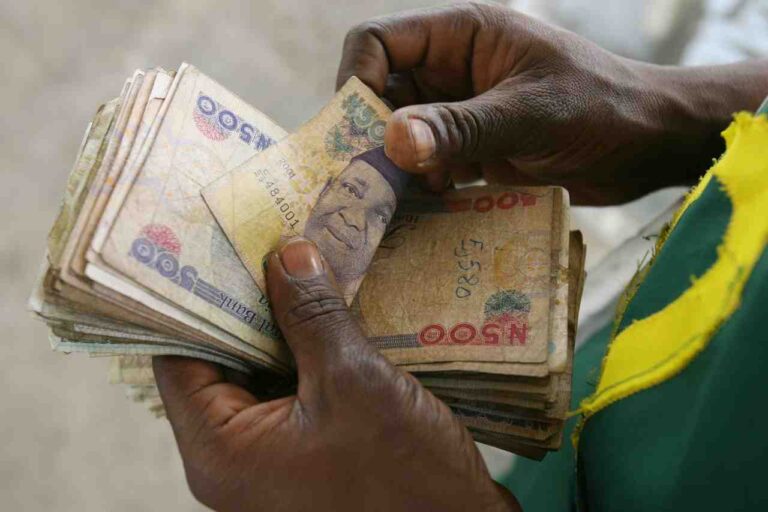
When a Nigerian applies for the same visa from Lagos, they convert naira to CAD. The naira has lost significant value against major currencies over the past few years, and the rate can shift meaningfully within weeks. Someone who saved “enough” in naira three months ago might be short today without having spent a single naira.
This is the fundamental Nigerian POF challenge. It’s not that Nigerians can’t afford to japa. It’s that the financial planning is inherently more complex when your savings are denominated in a currency that moves against you.
On top of that, Nigerian applicants face questions about bank verification, document credibility, and source of funds that applicants from countries with stronger financial reputations don’t encounter at the same level. None of this is insurmountable. But understanding these specific challenges is the first step to navigating them.
Quick Summary
- Being Nigerian adds specific challenges to proof of funds that applicants from other countries don’t face. Naira volatility, limited access to foreign currency, and international bank verification issues are real obstacles.
- The same POF minimum that a British or Indian applicant can meet relatively straightforwardly takes more planning and more buffer from a Nigerian applicant because of exchange rate risk.
- Nigerian bank statements and attestation letters are verifiable by international embassies, but only if you use the right banks and request the right document formats.
- There is no CBN rule preventing you from holding foreign currency savings in a Nigerian domiciliary account. This is a legal and useful tool for japa POF preparation.
- The Nigerian government does not publish a POF guidance document for outbound visa applicants. Everything you need comes from the immigration authorities of the country you’re applying to.
The Naira Exchange Rate Problem (And How to Manage It)
This is the most direct financial challenge for Nigerian POF planners. Your target is always set in a foreign currency. Your savings are almost always in naira. The gap between those two realities shifts constantly.
Here’s a concrete illustration. Say the UK student visa minimum living cost requirement is £13,347. When the naira is at ₦1,500 to the pound, you need ₦20 million. When the naira weakens to ₦1,800 to the pound, the same £13,347 now requires ₦24 million. You didn’t spend anything. The rate moved, and you went from having enough to being ₦4 million short.
The fix has three parts:
Set your savings target in foreign currency, not naira. Your goal is £13,347 (or whatever the requirement is for your destination). Naira is just the vehicle. Every week, convert your naira balance to the target currency using OANDA or the Bank of Canada rate, and check whether you still clear the minimum.
Build a 15 percent buffer above the minimum from day one. This absorbs moderate rate movements without requiring you to top up constantly. If the minimum is £13,347, your target is at least £15,349. If you save toward the buffered figure, most naira fluctuations won’t sink you.
Monitor the rate weekly, not monthly. The naira can move significantly within weeks. A monthly check is too slow. Set a Monday reminder to check OANDA and confirm your naira balance still converts correctly.
CBN Rules and Domiciliary Accounts: What You Can Actually Do
There’s a lot of confusion among Nigerian japa planners about what the Central Bank of Nigeria allows when it comes to holding and sending foreign currency. Let’s be clear about the practical reality.
Domiciliary accounts are legal and useful. Any Nigerian with a valid BVN and international passport can open a dollar, euro, or pound domiciliary account at a major Nigerian bank. GTBank, Zenith, Access, First Bank, and UBA all offer them. You can fund them through cash deposits bought at licensed bureaux de change, international wire transfers, or legitimate foreign currency earnings.
The account holds actual foreign currency. When you need to present your POF to an embassy, your dom account statement shows a balance in dollars or pounds, not naira. There’s no conversion calculation for the officer to make. The amount is already in the right currency.
Foreign currency restrictions apply to outward transfers, not savings. CBN regulations have at various points restricted how much foreign currency Nigerian banks can transfer abroad. These restrictions affect remittances and international transfers. They don’t prevent you from holding foreign currency savings in a domiciliary account inside Nigeria for POF purposes. Your dom account balance is your own, and you can present it as financial evidence to any embassy.
You don’t need to convert your naira savings to foreign currency to meet POF requirements. For UK applications, the Home Office converts your naira balance using the OANDA rate on your application date. For Canada, IRCC converts at the applicable rate. Holding in naira is acceptable. Holding in foreign currency is simply more stable and more straightforward.
Why Nigerian Bank Documents Get Questioned (And How to Fix It)
This is a reality that’s uncomfortable but important to name directly. Nigerian financial documents, bank statements in particular, face a higher level of scrutiny from visa officers than documents from many other countries. This is partly a function of the broader perception of document fraud risk associated with Nigerian applications, which is unfair to the majority of honest applicants but is the reality of the visa environment.
The practical response is not to be offended by this. It’s to make your documents unambiguously clean and verifiable.
Here’s what that means in practice:
Use tier-one commercial banks. GTBank, Zenith, Access, First Bank, UBA, and Fidelity are all internationally recognisable institutions with verifiable contact information. If an embassy needs to call your bank to verify your balance, these banks can be reached. Smaller or digital-only banks may not be verifiable through standard channels.
Request an official stamped statement from a branch, not an app export. This cannot be stressed enough. A PDF from your mobile app does not carry the same weight as a statement printed on bank letterhead, signed by an authorised officer, and stamped with the bank’s official seal. Always go to the branch.
Get a bank attestation letter in addition to your statement. This separate letter, on official letterhead, confirms your balance on a specific date and is signed by a bank officer. It gives the embassy a point-of-contact document they can use to verify your balance independently.
Make sure your name on all documents matches your passport exactly. Discrepancies between Amara O. Okonkwo on your bank statement and Amara Obiageli Okonkwo on your passport create doubt. Fix it at the bank before you print anything for a visa application.
The Source of Funds Question: A Nigerian-Specific Challenge
Visa officers are trained to ask where money came from, but this question lands harder on Nigerian applicants than on many others. Nigerian income structures, multiple income streams, informal business earnings, and family transfer culture can all create a statement history that looks unusual to a European or North American reviewer.
A few scenarios that commonly arise for Nigerian applicants, and how to handle them:
Business income from informal or cash-based operations. If you run a business that generates significant cash income, you need to show a credible paper trail. Business registration at the CAC, bank records for the business account, and a letter from your accountant or tax records showing income level are all helpful. Cash income that appears in your personal account without any documentation looks unexplained.
Multiple income sources. Many Nigerians earn from a salary plus freelance work plus rental income or investments. This is legitimate, but each income stream needs some form of documentation. Payslips for the salary. Client contracts or invoices for the freelance work. Property documentation for rental income. You don’t have to explain every credit in minute detail, but you should be able to if asked.
Regular family transfers. Nigerian family financial culture involves regular support transfers between relatives. If your account receives regular transfers from a parent, sibling, or extended family member, those credits are legitimate but may require explanation. A pattern of consistent monthly transfers from an identified sender is far less suspicious than irregular large deposits from multiple unnamed sources.
The general principle is this: your financial story should have a beginning, a middle, and a logic. Where does the money come from? Why does it exist in this account? What is it for? If you can answer those three questions for every significant credit in your account history, your POF documentation is in good shape.
The Nigerian Diaspora Sponsor Angle
A significant portion of Nigerian japa applicants have a relative already abroad, whether in the UK, Canada, the US, or elsewhere, who is willing to sponsor part or all of the application financially.
This is a legitimate and powerful option. A sponsor based in Canada or the UK may find it easier to meet POF requirements from their local account than you can from Nigeria. They hold the money in the destination currency. There’s no exchange rate risk. Their bank statement format is already in the form that the visa officer expects.
To use a diaspora sponsor:
- The sponsor provides their bank statement from their foreign account, covering the required period
- A signed, dated sponsorship letter stating your name, their relationship to you, what costs are being covered, and for how long
- Proof of relationship between you and the sponsor (birth certificate, statutory declaration, or equivalent)
- Evidence of the sponsor’s income or wealth source so the officer can see the money is genuinely theirs
The practical limitation is that some visa types require funds to be in the applicant’s own name or the applicant’s immediate family’s name. Check the specific rules for your visa type and destination before relying on a diaspora sponsor as your sole POF strategy.
Damilola’s UK Student Visa POF
Damilola is a 27-year-old pharmacist from Ibadan applying for a UK student visa for a one-year MSc in London. Her tuition is £18,000. She’s paid a £3,000 deposit, leaving £15,000 outstanding. The living cost requirement for London is £13,347. Her total POF requirement is £28,347.
At ₦1,700 to the pound (illustrative rate), that’s approximately ₦48.2 million. With her 15 percent buffer, her target is ₦55.4 million.
She earns ₦450,000 per month as a pharmacist. Her father is a retired civil servant with a small pension and a rental property income. Here’s how they structure it:
Her father opens a GTBank savings account and contributes ₦2 million per month from his rental income, building a clear landlord income trail. Damilola contributes ₦150,000 per month into the same account as a co-contributor with documented relationship. Over 12 months, the account accumulates ₦25.8 million from the father’s contributions alone, plus Damilola’s ₦1.8 million.
That’s still short. So they involve her older brother in Canada, who sends CAD $500 per month (approximately ₦570,000 at current rates) via international wire transfer. This is documented as regular family support and builds a foreign currency transfer trail over the same 12-month period.
At the end of 12 months, the father’s account has a strong balance with a clean 12-month history. The father is the formal sponsor. Damilola’s own account shows consistent small savings. Her brother’s transfers are separately documented with the wire receipts.
The total POF story is multi-source but fully documented, transparent, and backed by paper evidence at every point. That’s what strong Nigerian POF looks like.
FAQ
Does the UK Home Office actually call Nigerian banks to verify balances?
UKVI states in their published guidance that they may verify financial evidence with the applicant’s bank. For major Nigerian commercial banks, this verification is possible through standard contact channels. The practical implication is that your statement needs to come from a bank that can be reached and verified. Digital or informal financial institutions may fail this test even if the balance is genuine.
Is there any CBN restriction on how much money I can save in a domiciliary account?
No regulatory cap applies to the balance you can hold in a Nigerian domiciliary account for personal savings. CBN foreign exchange restrictions primarily affect outward transfers and the commercial supply of foreign currency, not personal savings balances held in domiciliary accounts at Nigerian banks. You can hold as much foreign currency as you legitimately acquire in your dom account.
My income comes partly from crypto trading. Can I include those earnings in my POF?
This is an area of genuine caution. Crypto-derived income sitting in a bank account is technically the same as any other cash balance once it’s been converted and deposited. The problem is the trail. If your bank account shows regular large credits from a crypto platform, a visa officer may find it difficult to verify the source as legitimate. If you plan to use crypto earnings as part of your POF, convert them to naira well before your savings period begins, let them sit in your account and blend into your regular financial history, and be prepared to explain the income source with exchange records and wallet transaction history if asked.
My parents want to help but they don’t have bank accounts. Can I still use their support?
Informal cash contributions from parents who don’t use formal banking are genuinely difficult to document for visa purposes. The contribution can still be made, but it needs to enter a formal banking system before it can serve as POF evidence. The most practical approach is to have your parent open a basic savings account at GTBank, Access, or First Bank, deposit their contributions into it, and transfer from that account to your POF account monthly. Even a simple account with a few months of history is better than undocumented cash contributions.
What if the embassy asks for my tax records? Nigerians don’t always file tax returns formally.
Some embassies, particularly for certain visa types, do ask for evidence of tax compliance. For employed Nigerians, your PAYE tax deductions should be documented on your payslip. For self-employed Nigerians, LIRS or FIRS tax receipts or clearance certificates serve this purpose. If you’ve not been formally filing, this is an area to address before you apply rather than scrambling when the embassy asks. A tax clearance certificate from the relevant state tax authority is the standard document to obtain.
The Nigerian POF Journey Is Harder Than It Needs to Be, But It’s Doable
The combination of naira volatility, foreign currency access limitations, and document scrutiny makes POF preparation more complex for Nigerian applicants than for applicants from most other countries. That’s just the truth.
But it’s also true that Nigerians successfully get UK, Canada, Australia, and Japan visas every week. They do it by starting early, using the right banks, building clean financial histories, documenting every unusual credit, and building buffers against the rate movements they can’t control.
Use the DeyWithMe Financial Proof Calculator to run your numbers at today’s exchange rate, build your month-by-month savings plan, and track your progress toward your target. It’s built specifically for this, and it updates as rates move.